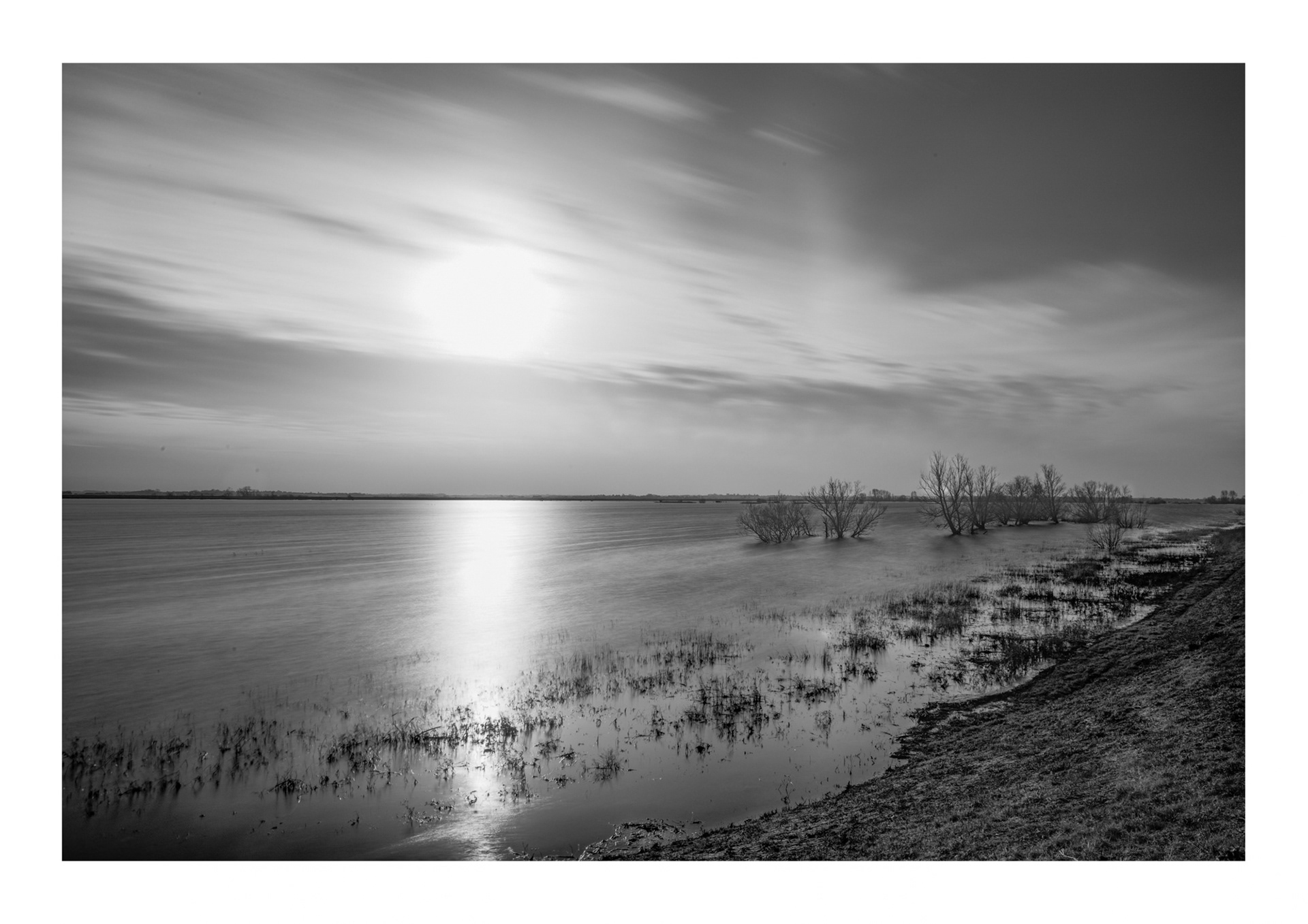
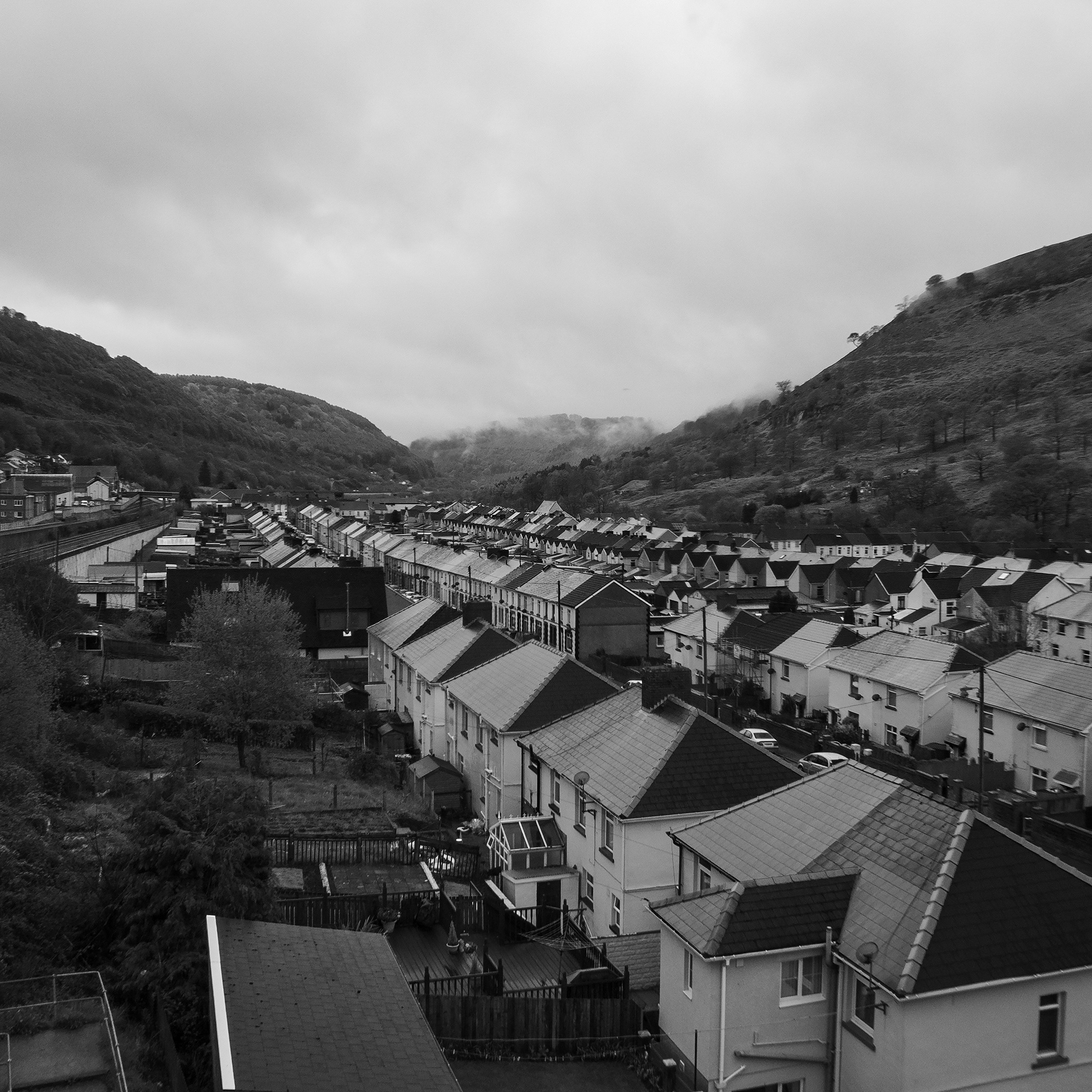
This body of work was made over a period of five years, through repeated returns to the same landscape. The Fens occupy a particular position in the British imagination: often described as flat, empty, or monotonous, they are frequently treated as a landscape without incident. That reading misunderstands both their history and their present condition. The Fenland landscape is not defined by emptiness, but by intervention. What persists here is not stasis, but continuous adjustment.
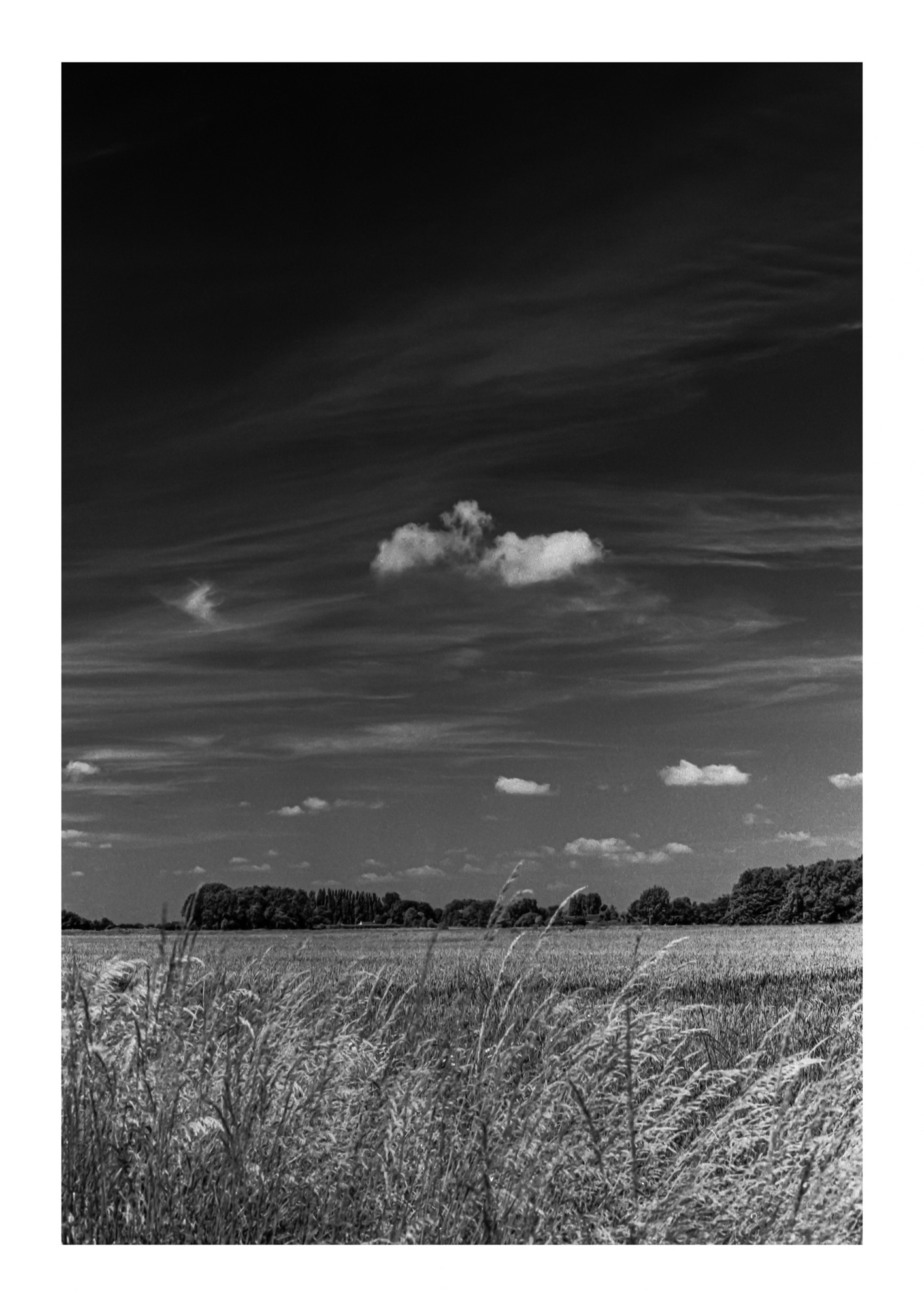
Fenland Skies, Mouth Lane
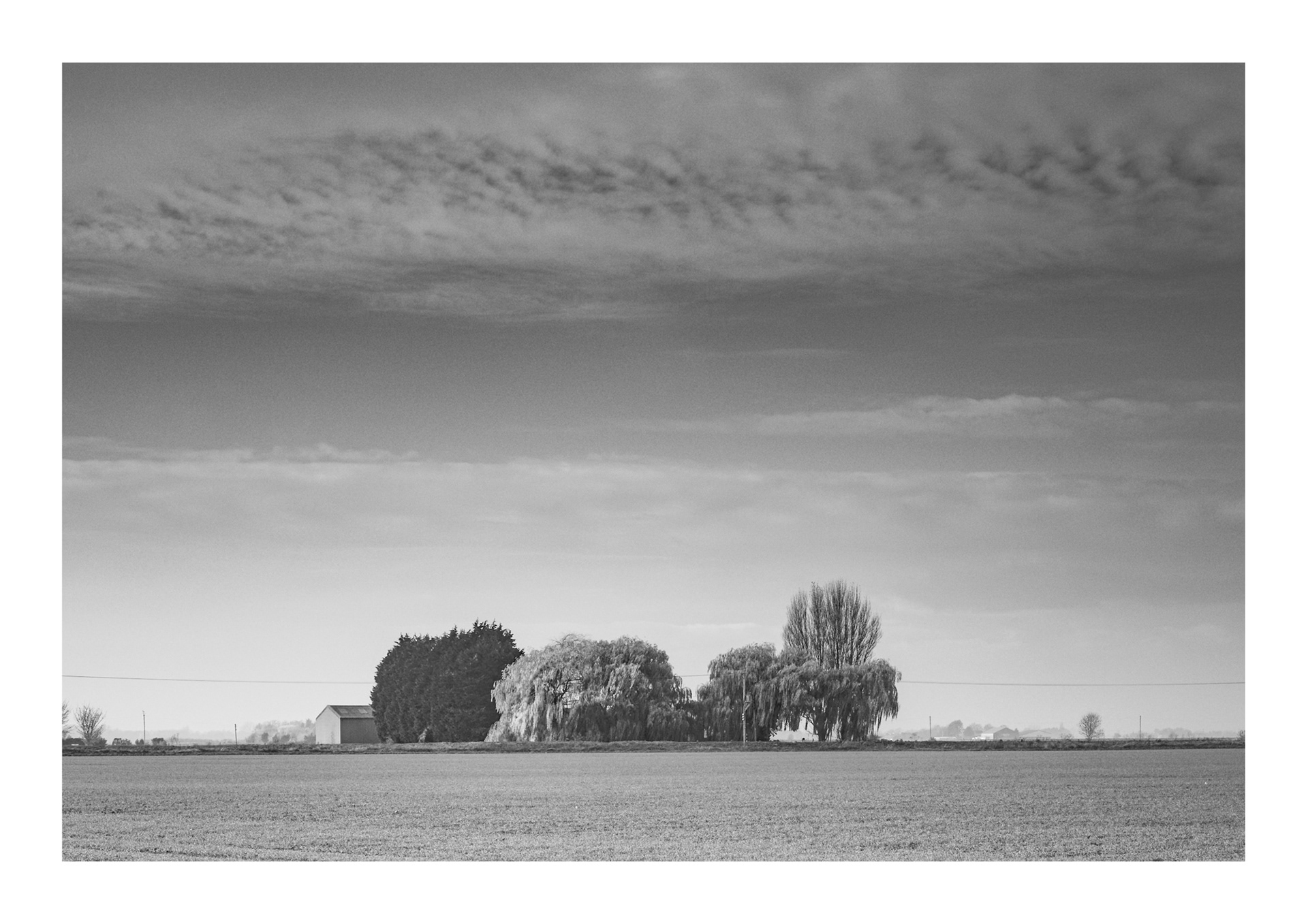
High Road, Tholomas Drove
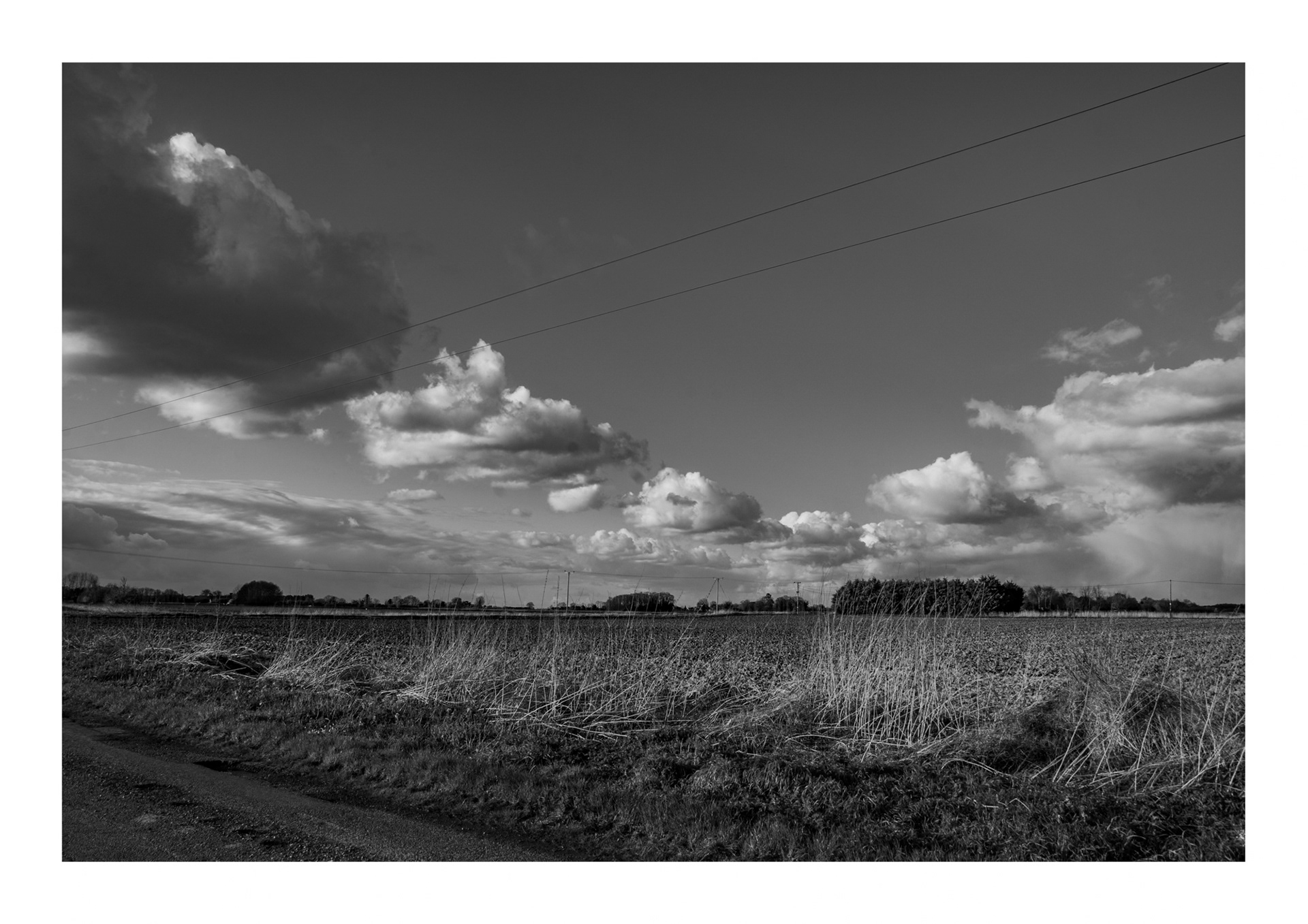
Fenland Skies 2, Mouth Lane
Geographically, the Fens are a low-lying region of eastern England, shaped by water long before they were shaped by agriculture. Historically, much of the land was marsh, fen, or seasonal floodplain, intersected by rivers and tidal flows. Large-scale drainage began in earnest from the seventeenth century onwards, accelerating through the eighteenth and nineteenth centuries as engineering techniques improved and agricultural value increased. Dutch engineers, local landowners, and later state-backed initiatives collaborated—often uneasily—to transform wet ground into arable land. What now appears as open farmland is the result of centuries of managed extraction: water removed, peat dried, soils exposed, and land held artificially below natural water levels.
This transformation did not conclude in the past. It continues daily. Pumps, drains, embankments, sluices, and washlands remain active systems rather than historical artefacts. Without constant maintenance, the land would not simply change character; it would cease to function in its current form. Subsidence, flooding, and waterlogging are not distant threats but ongoing conditions that must be actively countered. The Fens are not settled; they are sustained.
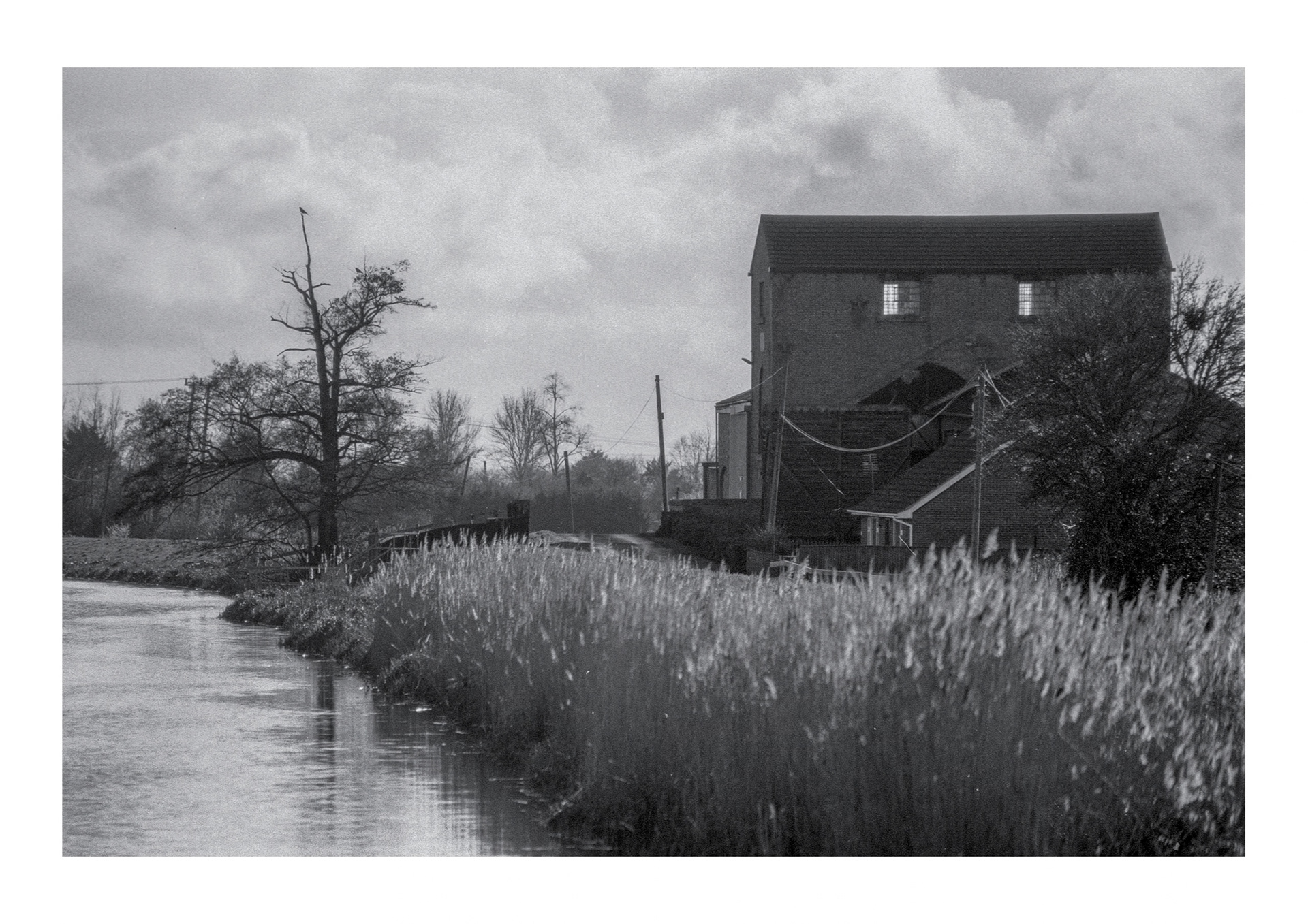
Mepal Pumping Station
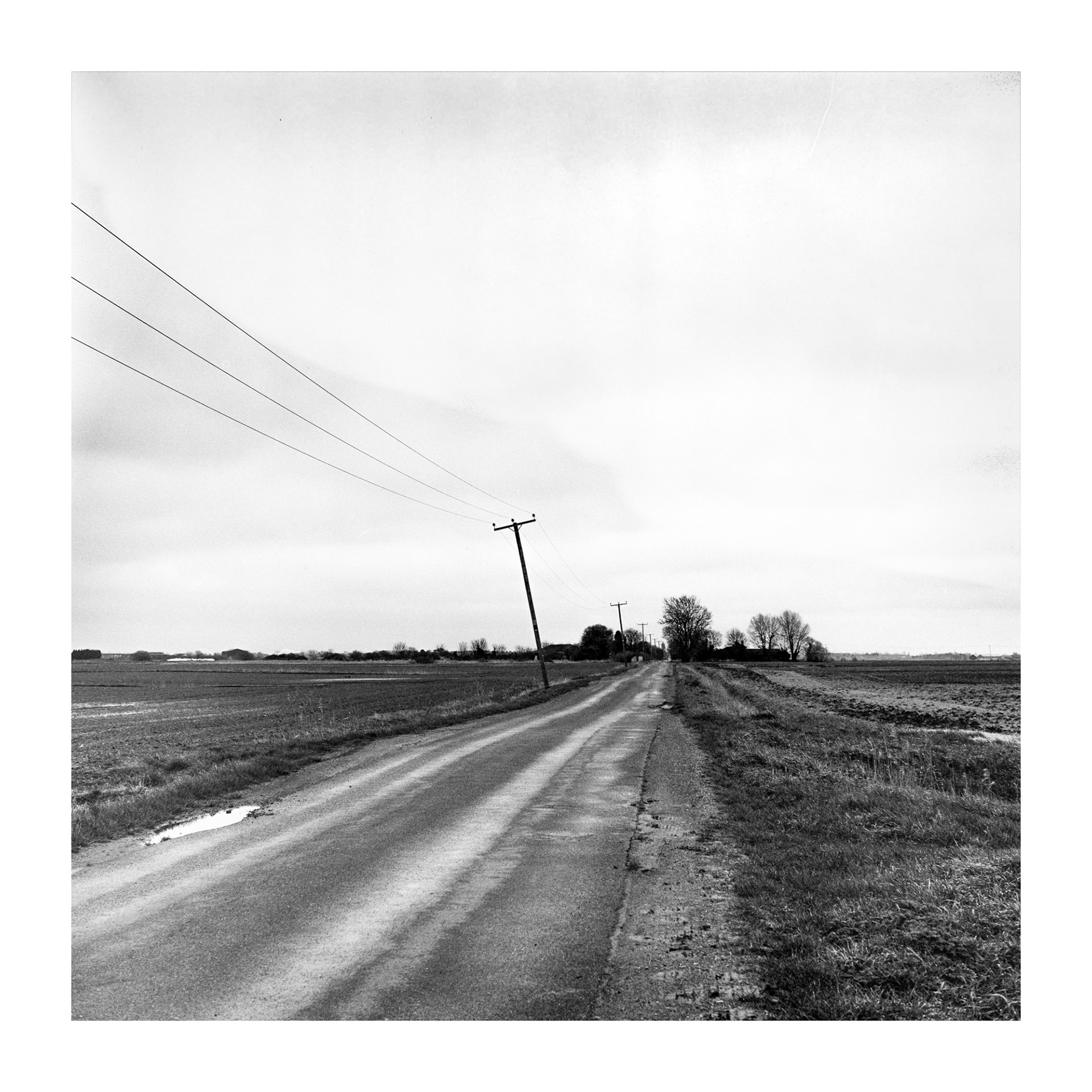
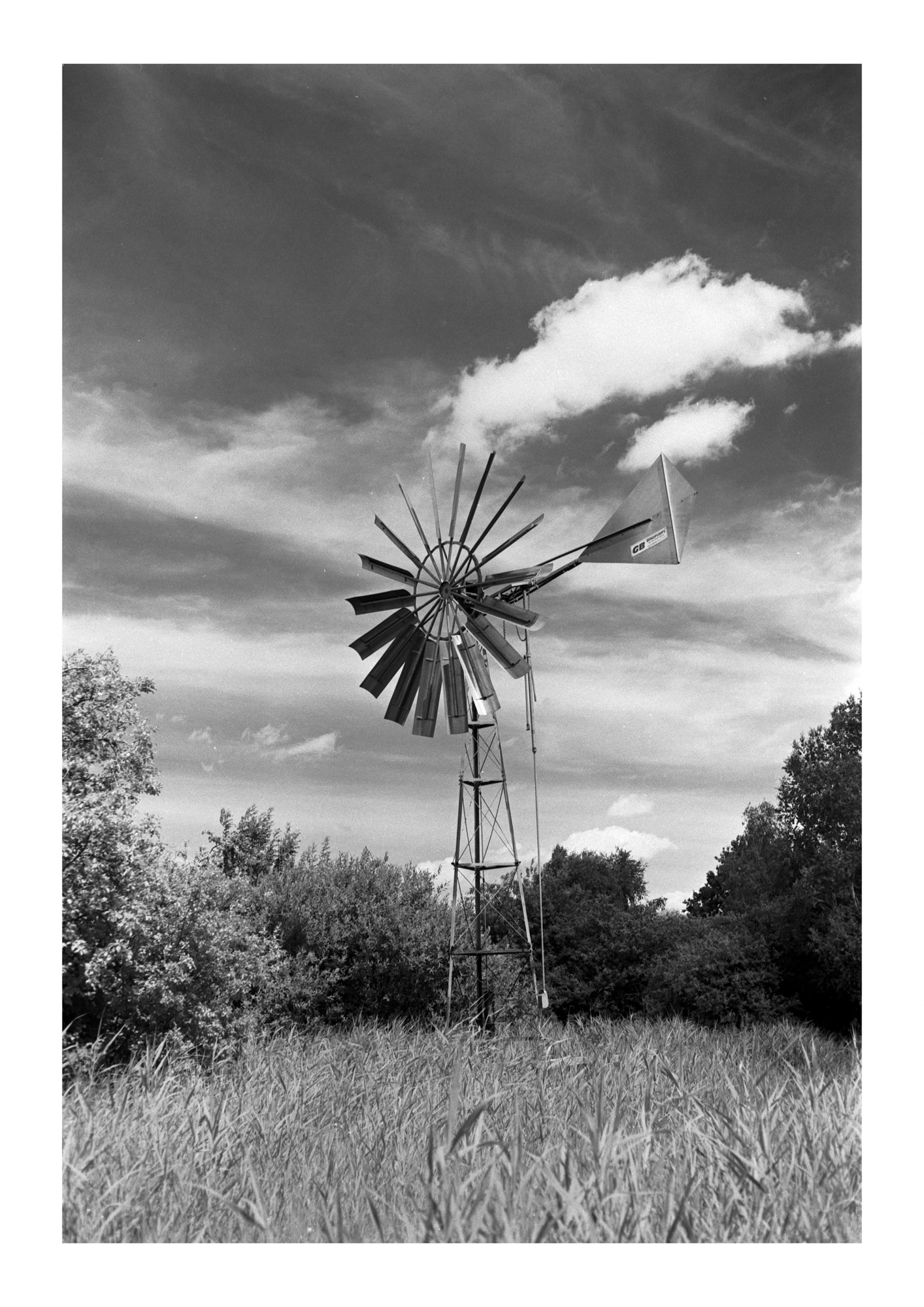
Water Pump, Wicken Fen
Much of this maintenance is organised through institutions that operate quietly and persistently. Internal Drainage Boards, local authorities, and landowners manage water levels through schedules, inspections, and routine intervention. Their work rarely enters public awareness unless something fails. This invisibility is part of the landscape’s character. The photographs in this series reflect that condition, focusing on the structures through which governance, labour, and land intersect without spectacle or ceremony.
The governance of water in the Fens is not abstract. It is enacted through routine decisions: how high to hold a drain, when to clear a channel, which banks require reinforcement, and which areas are permitted to flood under controlled conditions. These decisions are practical rather than ideological, yet they carry long-term consequences for settlement, agriculture, and ecology. The landscape visible today is the cumulative result of such choices, layered over time rather than planned in a single moment. This produces a geography that feels stable while remaining perpetually provisional. The land appears calm, but that calm is conditional. It depends on systems functioning correctly, on maintenance being carried out, and on intervention continuing without interruption. The photographs do not attempt to visualise this governance directly. Instead, they attend to its physical traces: the channels cut into the ground, the reinforced edges, the structures that regulate flow and movement. These are the visible interfaces between natural process and human control. By focusing on these interfaces, the work situates itself within the everyday operation of the landscape rather than outside it, observing how authority, labour, and environment are quietly entangled.
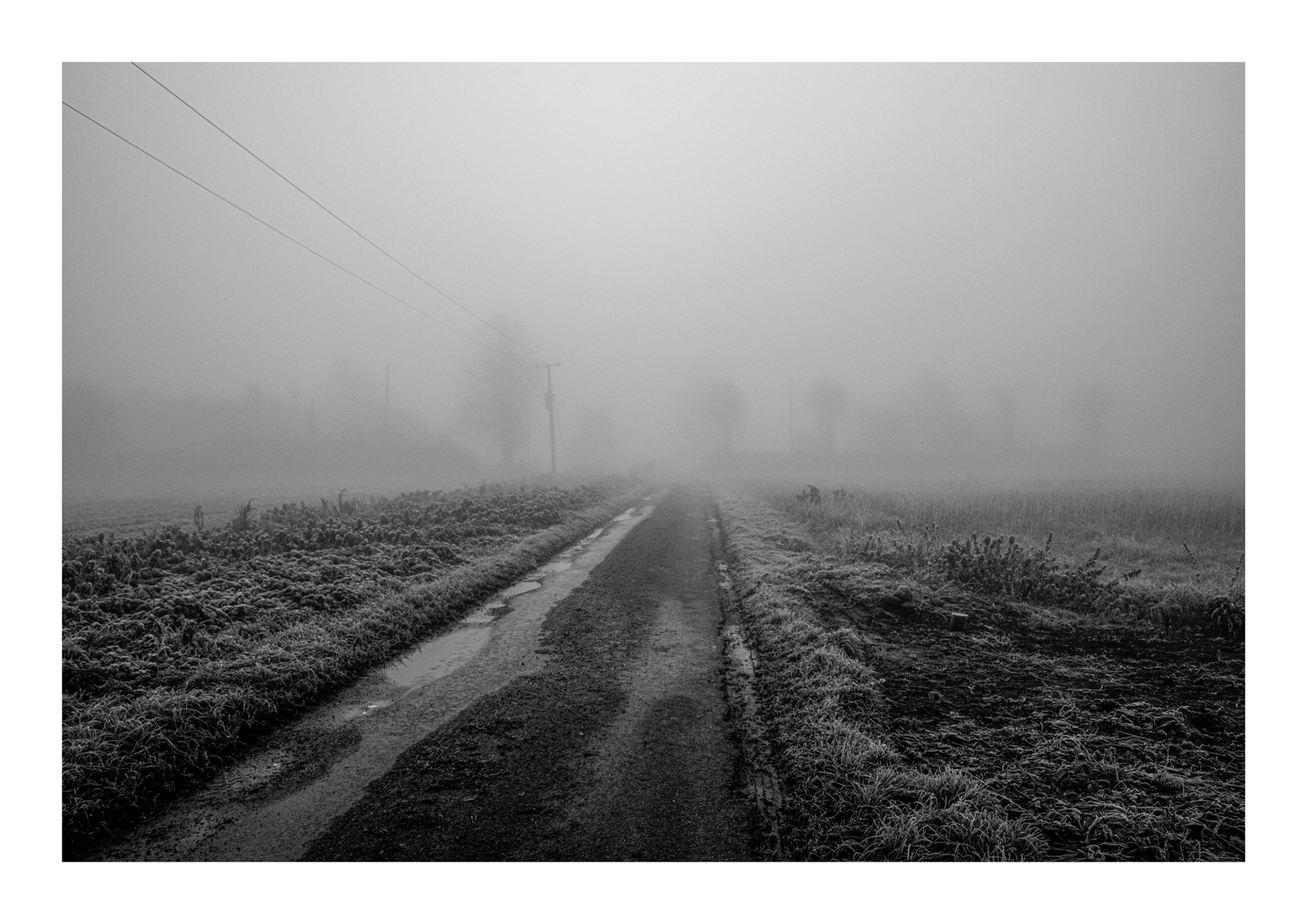
Fog on Cross Lane
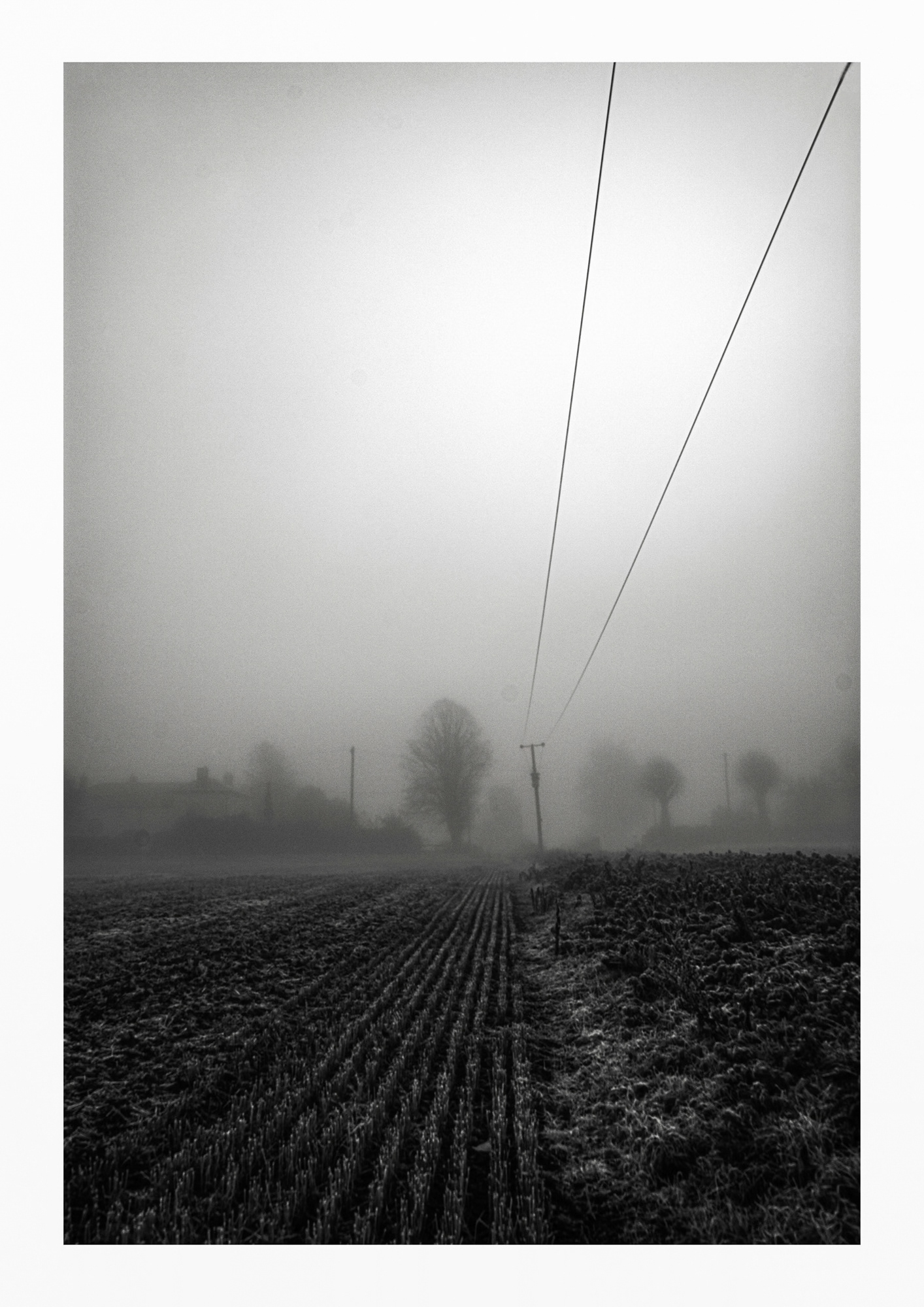
Fog, Mouth Lane 1
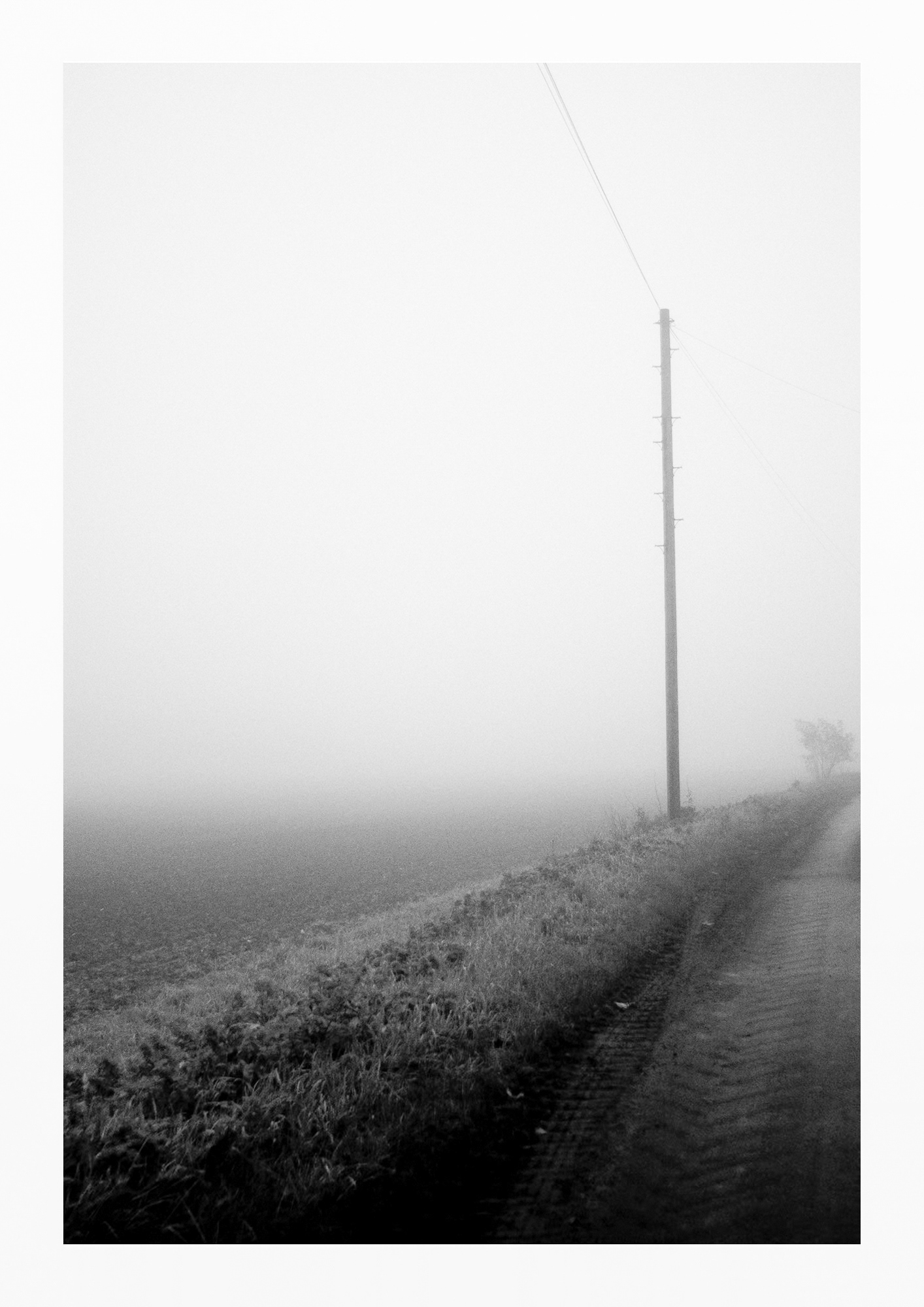
The photographs do not document events or seek out dramatic moments. They are concerned instead with the ordinary structures that enable the landscape to remain usable. Roads, banks, sheds, bridges, wind pumps, and residual buildings recur throughout the work. These are not landmarks in a conventional sense. They are elements of a working system, passed daily, altered incrementally, and rarely remarked upon unless they fail. Their significance lies not in individuality, but in function.
Human presence in the photographs is largely indirect. People appear through what they have built, maintained, adapted, or abandoned. This reflects a broader condition of the Fens, where labour is both essential and largely invisible. The landscape does not announce the effort required to keep it as it is. Instead, that effort is embedded in infrastructure and routine. The absence of people in the images is not an attempt to remove human agency, but a way of acknowledging that agency as diffuse, procedural, and ongoing rather than individual or spectacular.
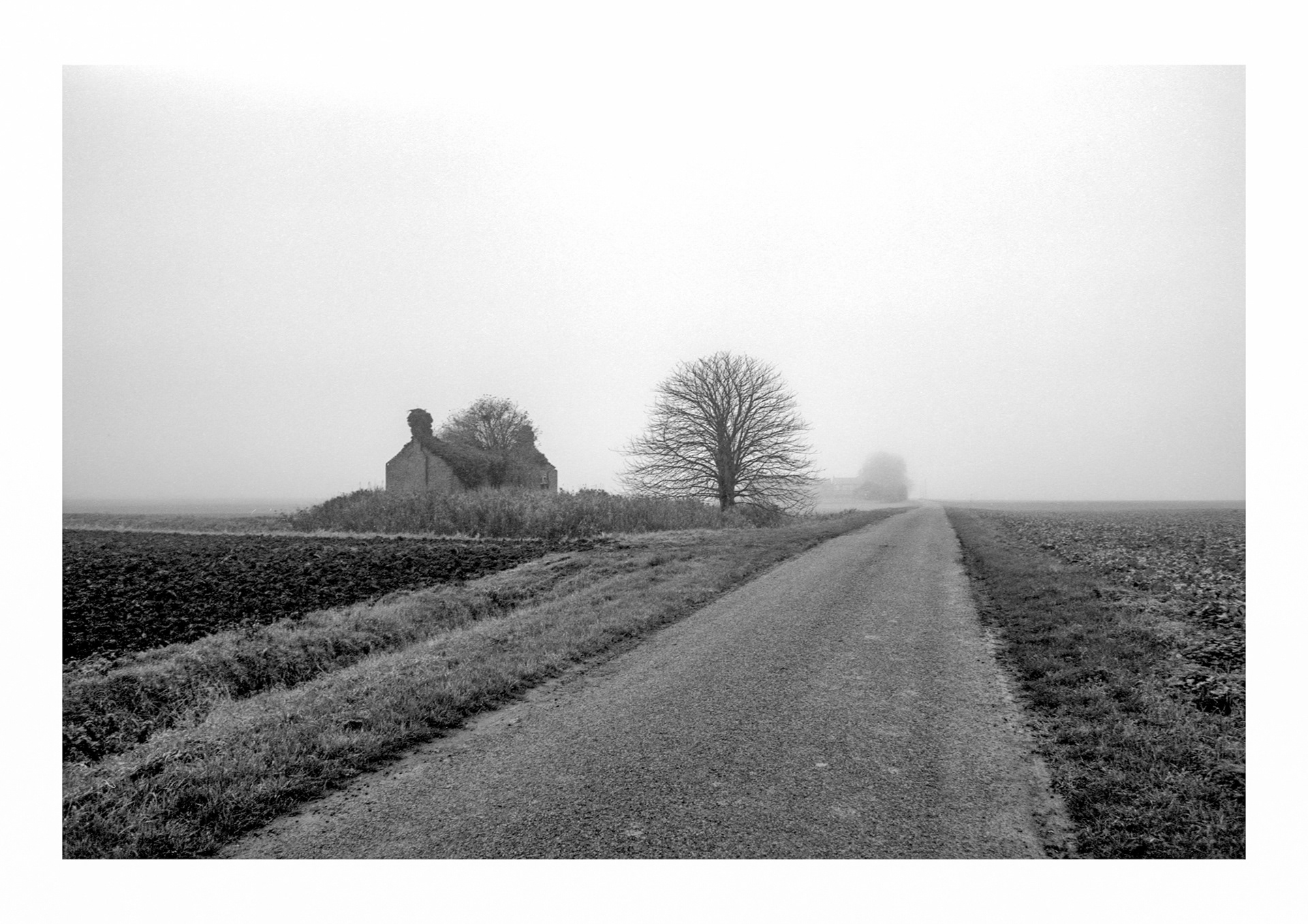
Lutton Gate Road
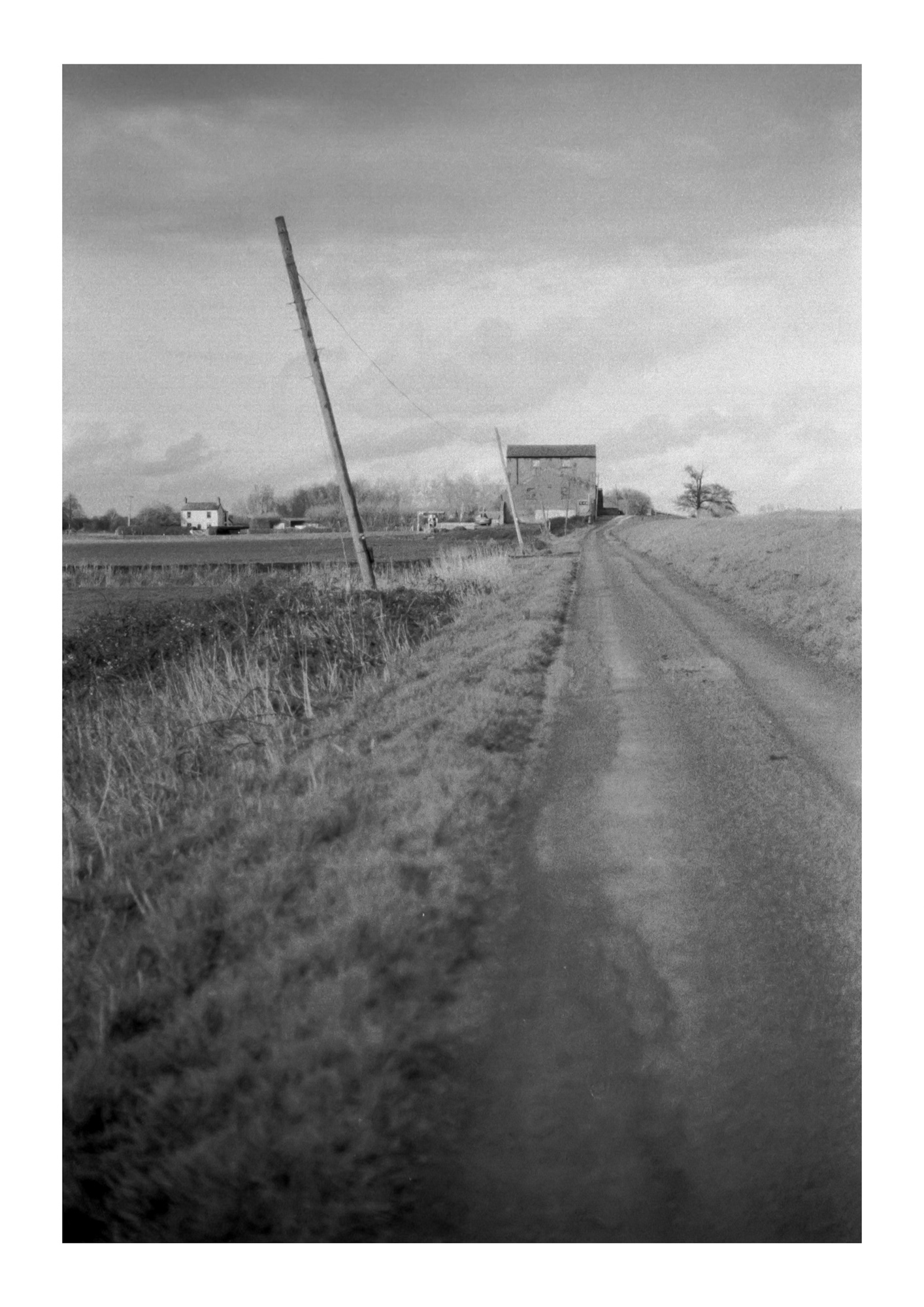
Engine Bank
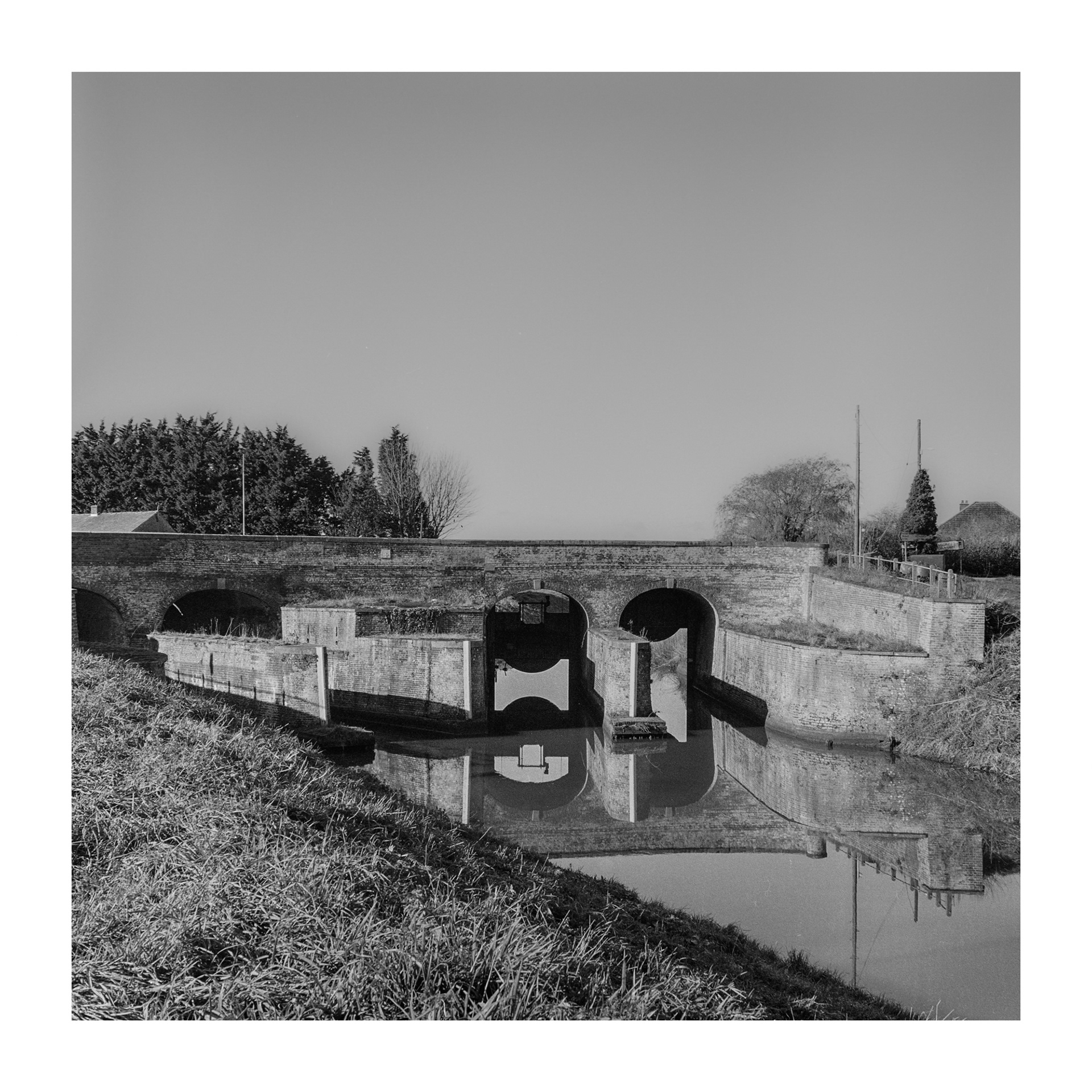
North Level Main Drain
Culturally, the Fens have long occupied an ambiguous position. They have been framed historically as marginal land: difficult, unhealthy, resistant to settlement. Early drainage schemes were often contested, displacing existing ways of life and provoking conflict between local communities and external interests. Even as the land became agriculturally productive, it retained a reputation for isolation and difference. That cultural residue remains. Fenland villages are often experienced as peripheral, despite their central role in national systems of food production, logistics, and environmental management.
The buildings that appear in this work reflect that history of adaptation and change. Sheds, chapels, bakehouses, and pumps speak to former needs as much as current ones. Some structures remain in use, others survive in altered roles, and some persist only as derelict ruins. The work does not treat these buildings nostalgically. There is no attempt to recover a lost past or to frame decline as a moral condition. Instead, the photographs observe how structures outlast their original purposes and are absorbed into new arrangements, or simply remain as evidence of previous systems.
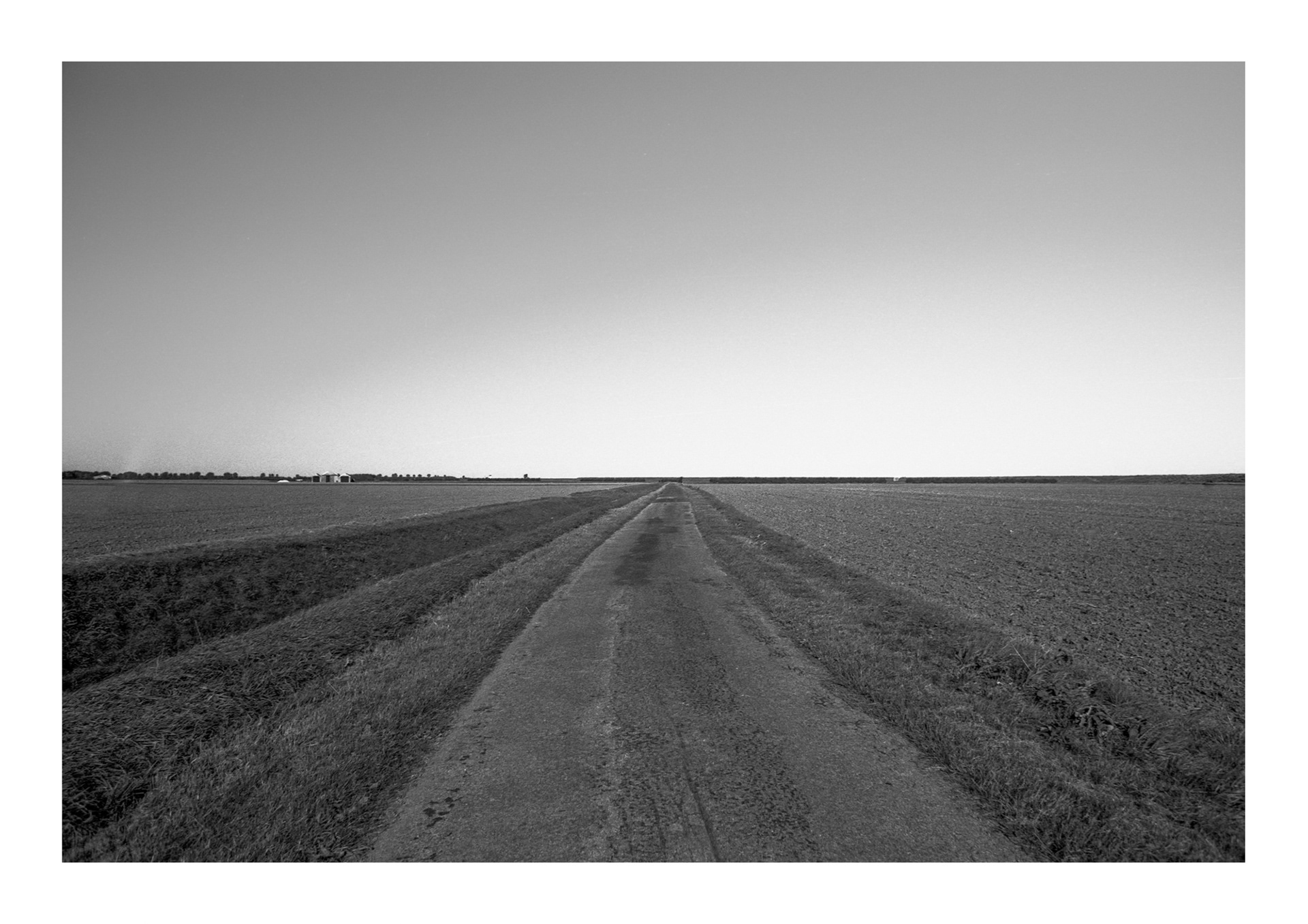
Gedney Marsh
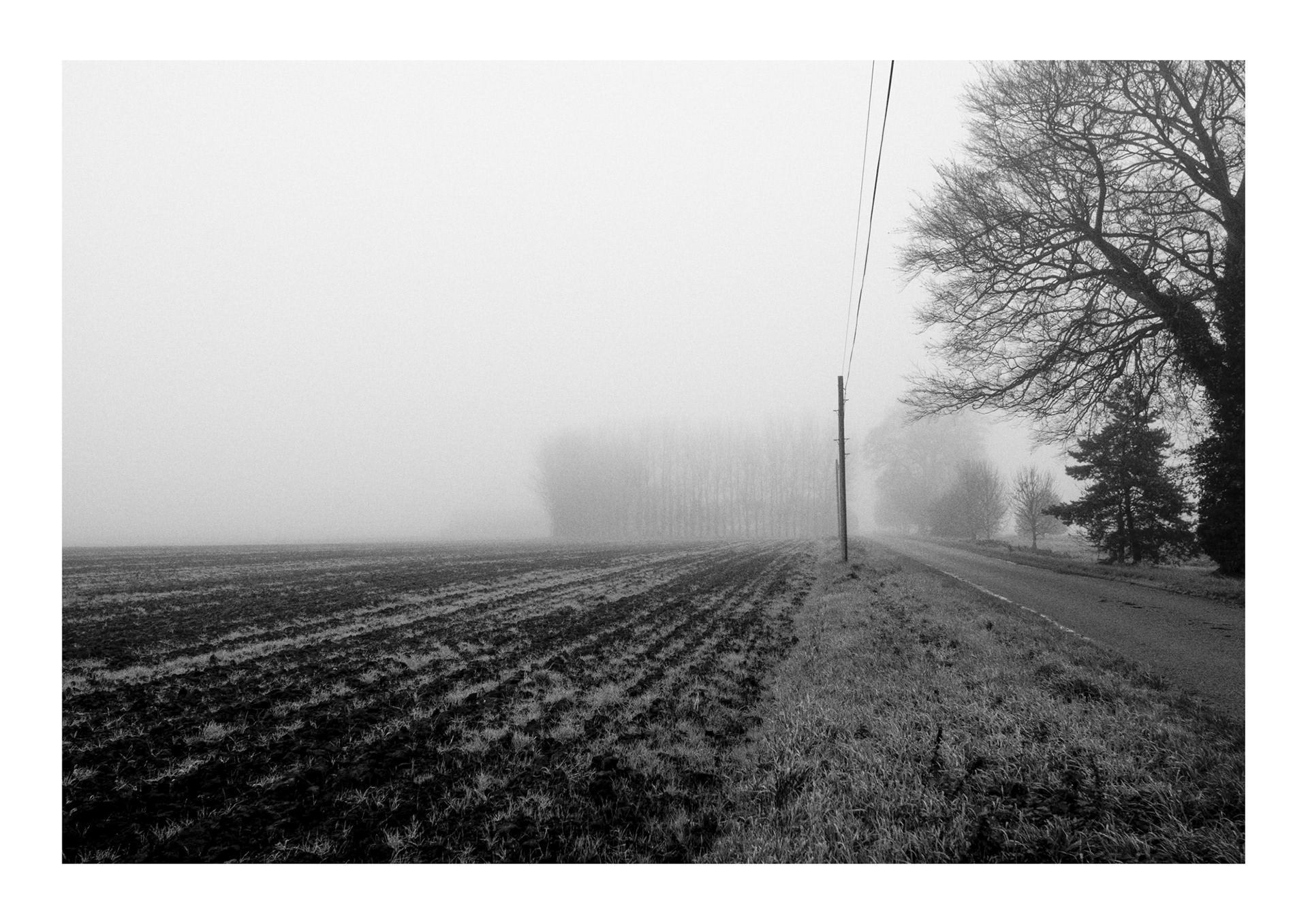
Field at Guyhirn
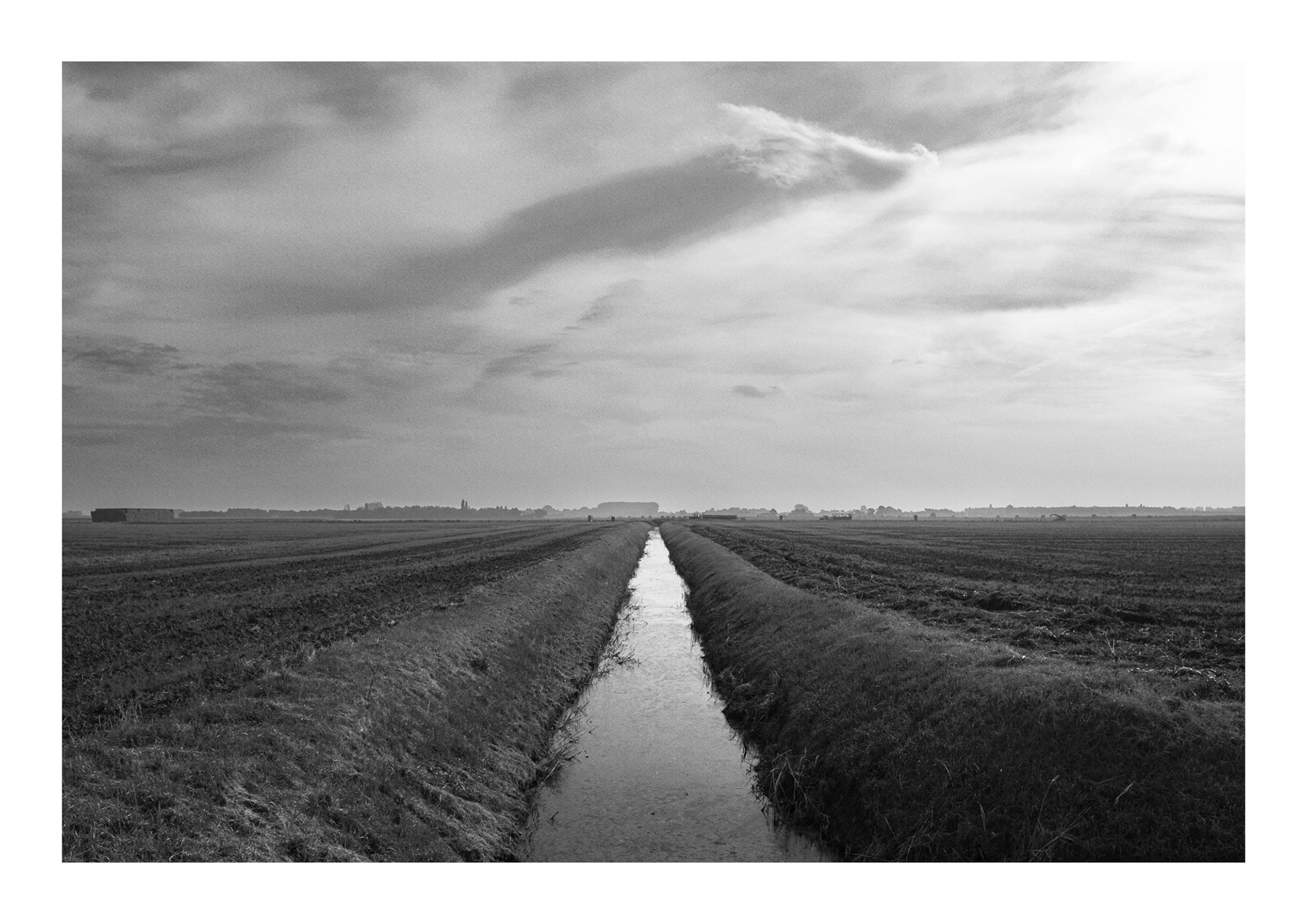
Euximoor Fen
Working over an extended period altered how the landscape was understood photographically. Initial encounters were shaped by orientation and discovery, but familiarity quickly displaced novelty. Returning repeatedly to the same places revealed that change in the Fens rarely announces itself. It occurs through maintenance schedules, seasonal cycles, and incremental repair. A road surface is repaired. A drain is cleared. A bank is reinforced. These changes are functional rather than expressive, and they resist dramatic representation.
Time in the Fens operates on multiple scales. Seasonal rhythms govern planting, drainage, and harvest. Longer historical cycles shape the slow subsidence of peat soils and the reconfiguration of water systems. Alongside these is the time of maintenance: inspection, repair, replacement. The photographs sit within this layered temporality. They do not attempt to freeze a decisive moment, but to acknowledge a state of ongoingness.
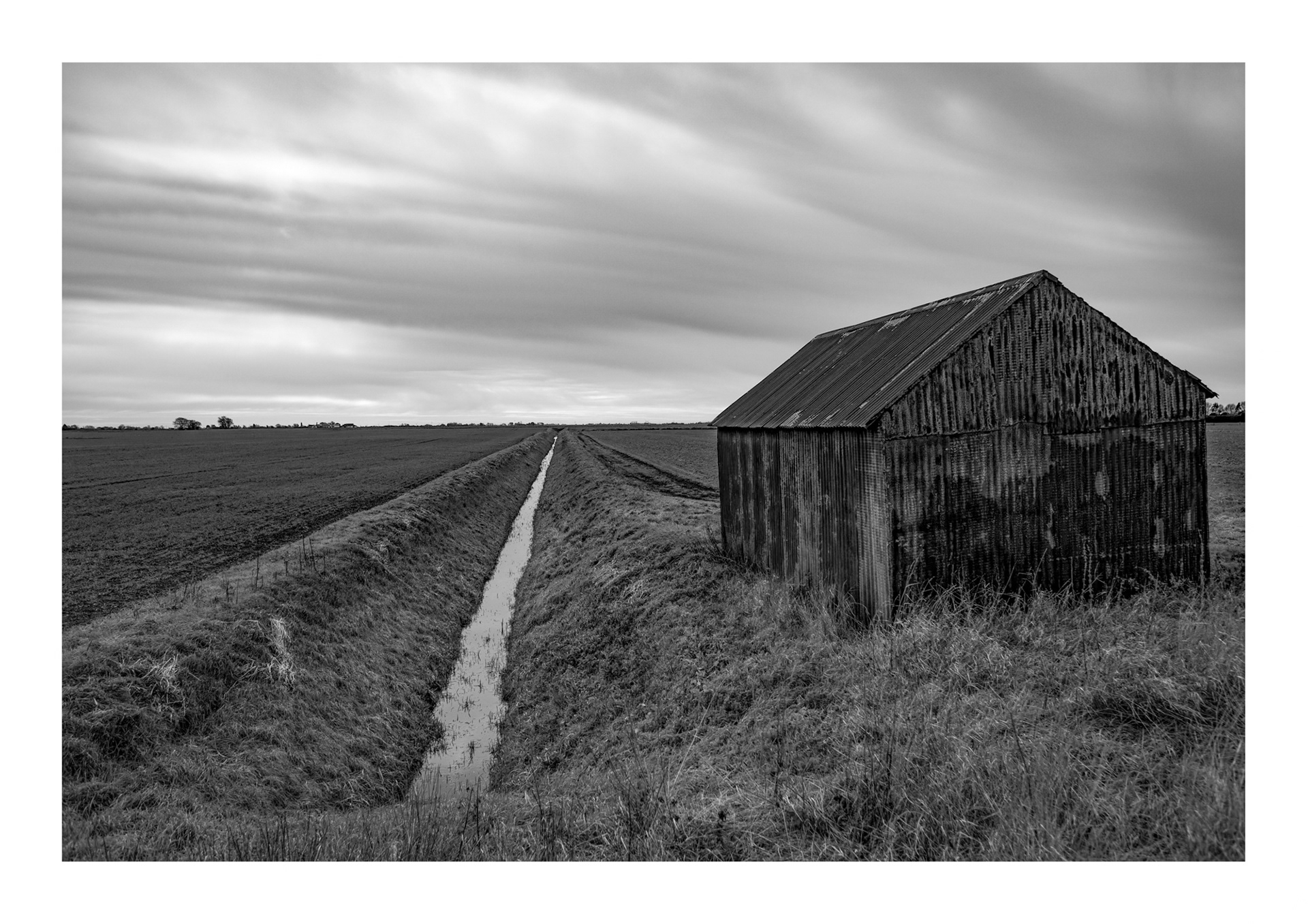
Shed and Drain
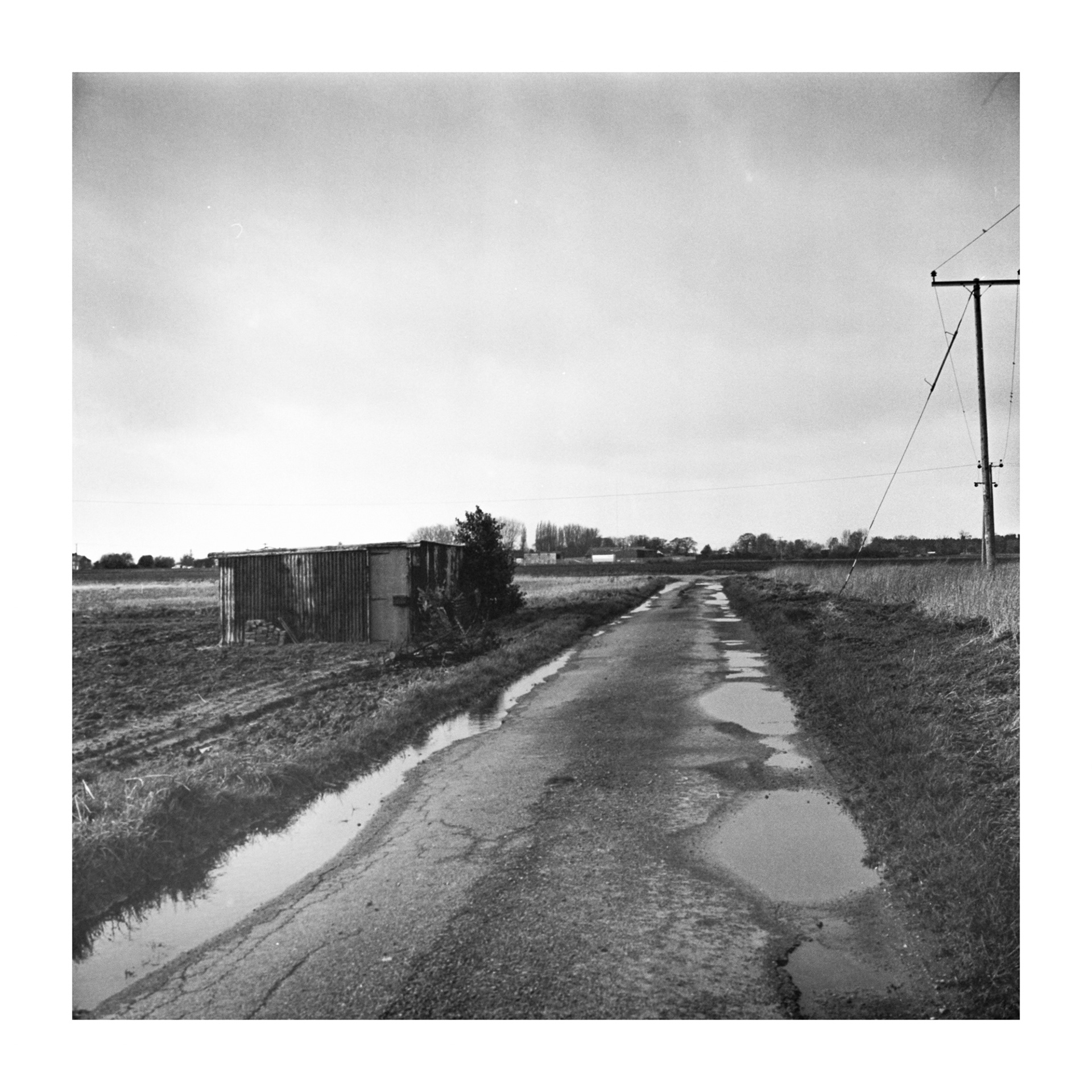
Roy's Shed
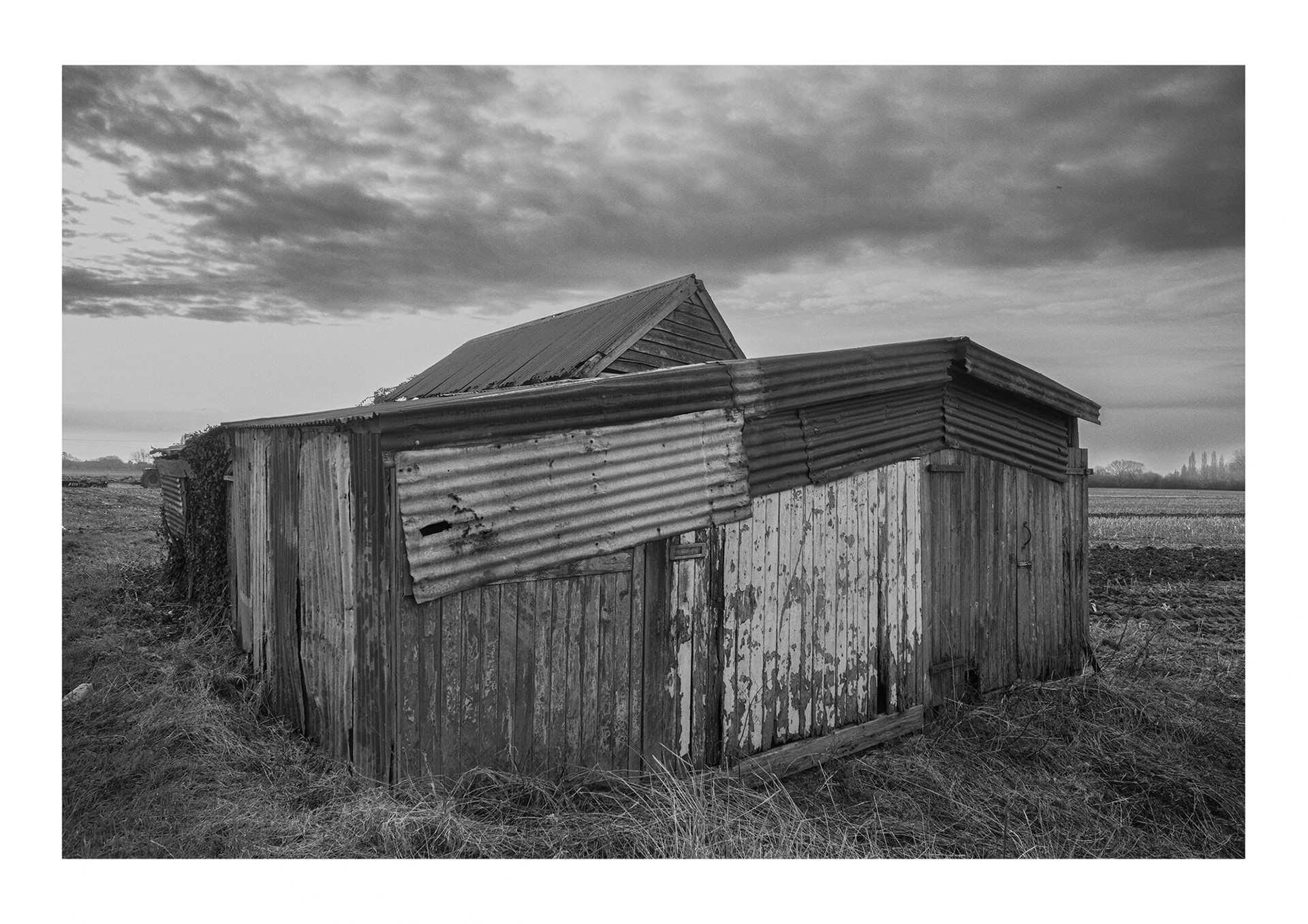
Shed, Gadd's Lane
Repetition became central to the work. Similar subjects recur across the series, not as motifs to be decoded but as elements encountered again and again in lived experience. Roads appear more than once, as do watercourses and buildings. No single image claims to summarise the landscape. Meaning emerges instead through accumulation. The work resists narrative progression. There is no sense of journey, arrival, or resolution. The photographs reflect a place that is always in the middle of a process.
This approach also resists a particular photographic tradition in which rural landscapes are framed as sites of escape, contemplation, or loss. The Fens do not function in that way. They are not a retreat from systems of production; they are an expression of them. The land is worked intensively, managed precisely, and valued primarily for its productivity. Any sense of quiet or stillness is provisional, dependent on systems operating correctly in the background.
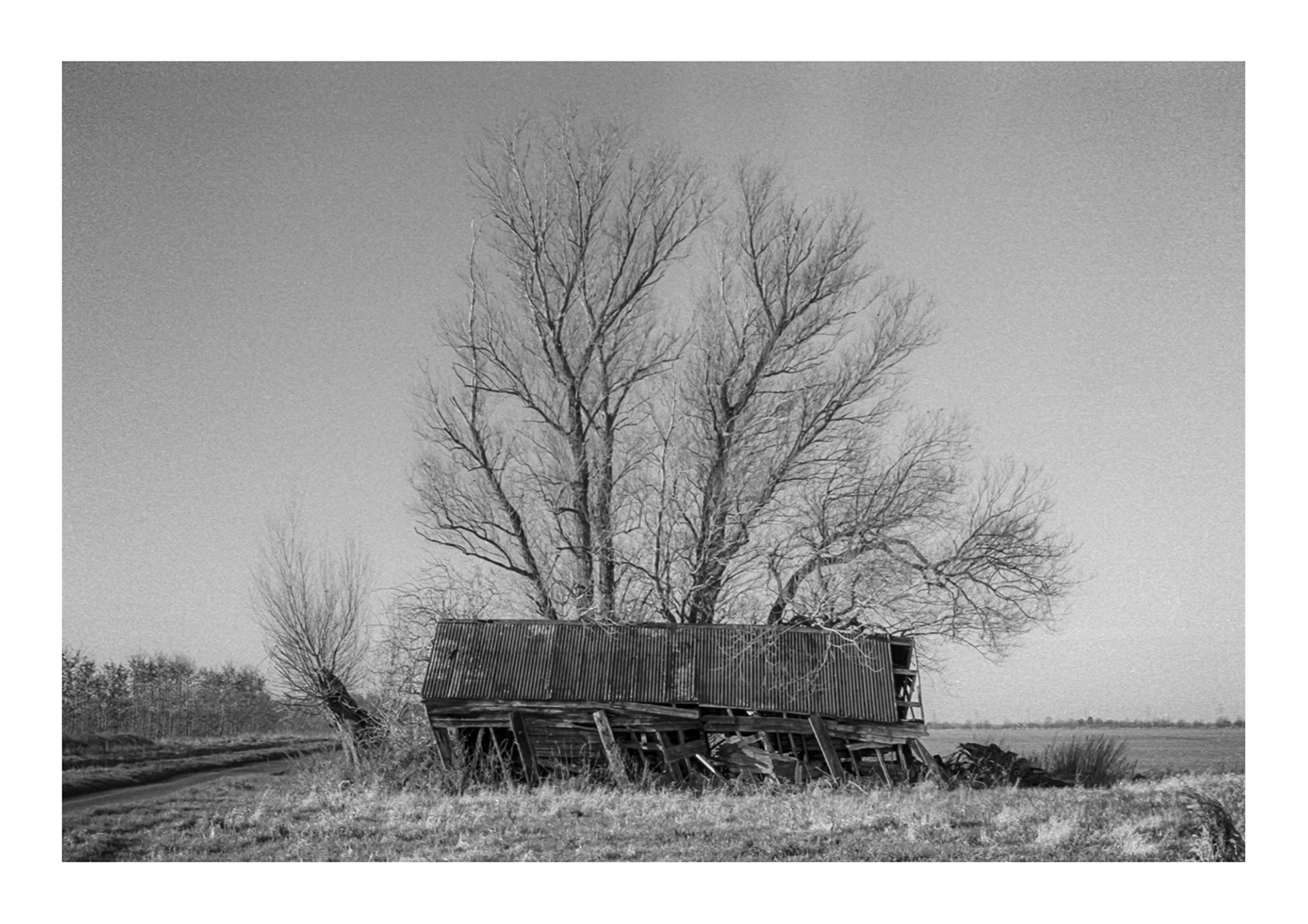
Shed in the Fens
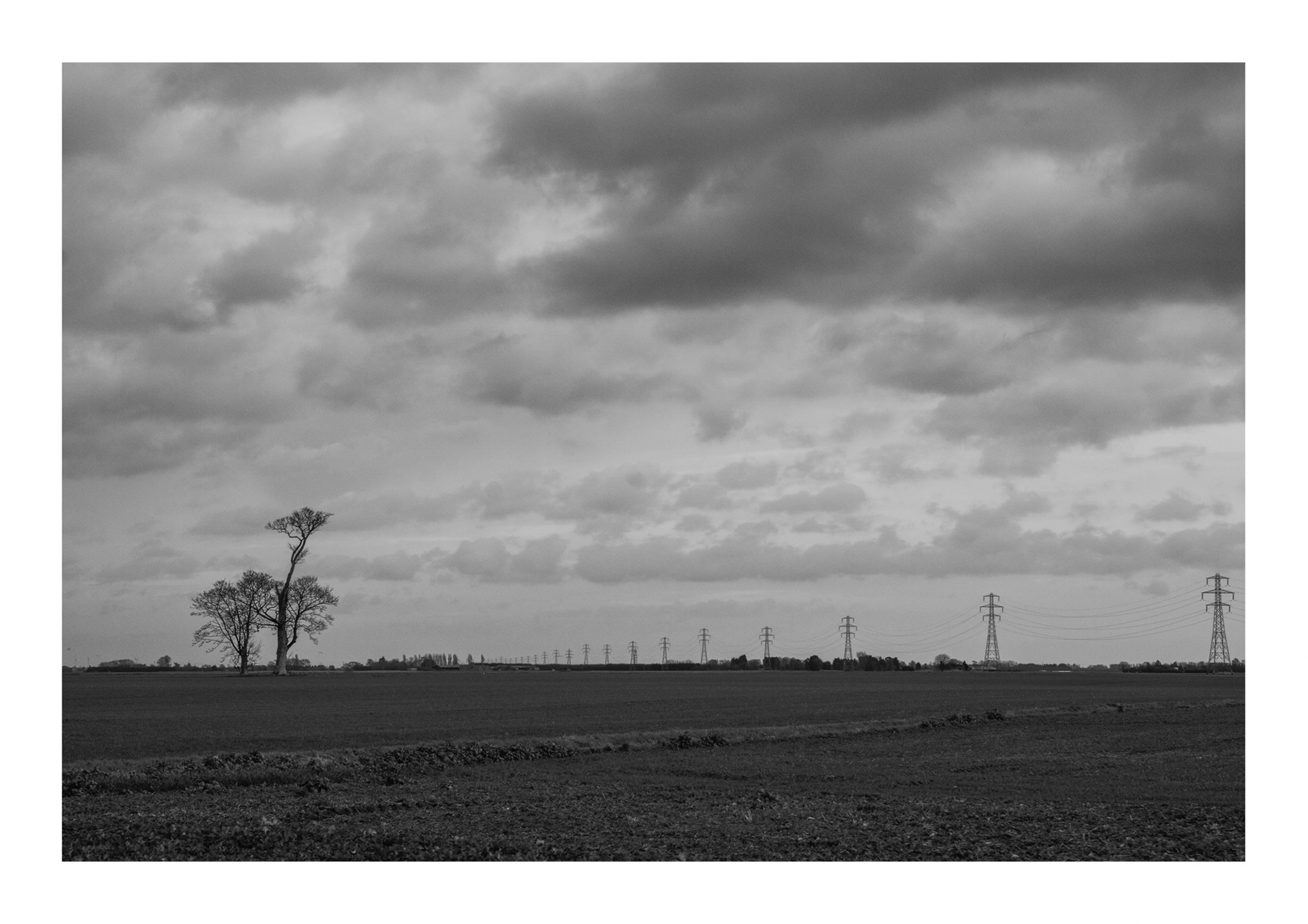
Mole Drove, Sutton Fen
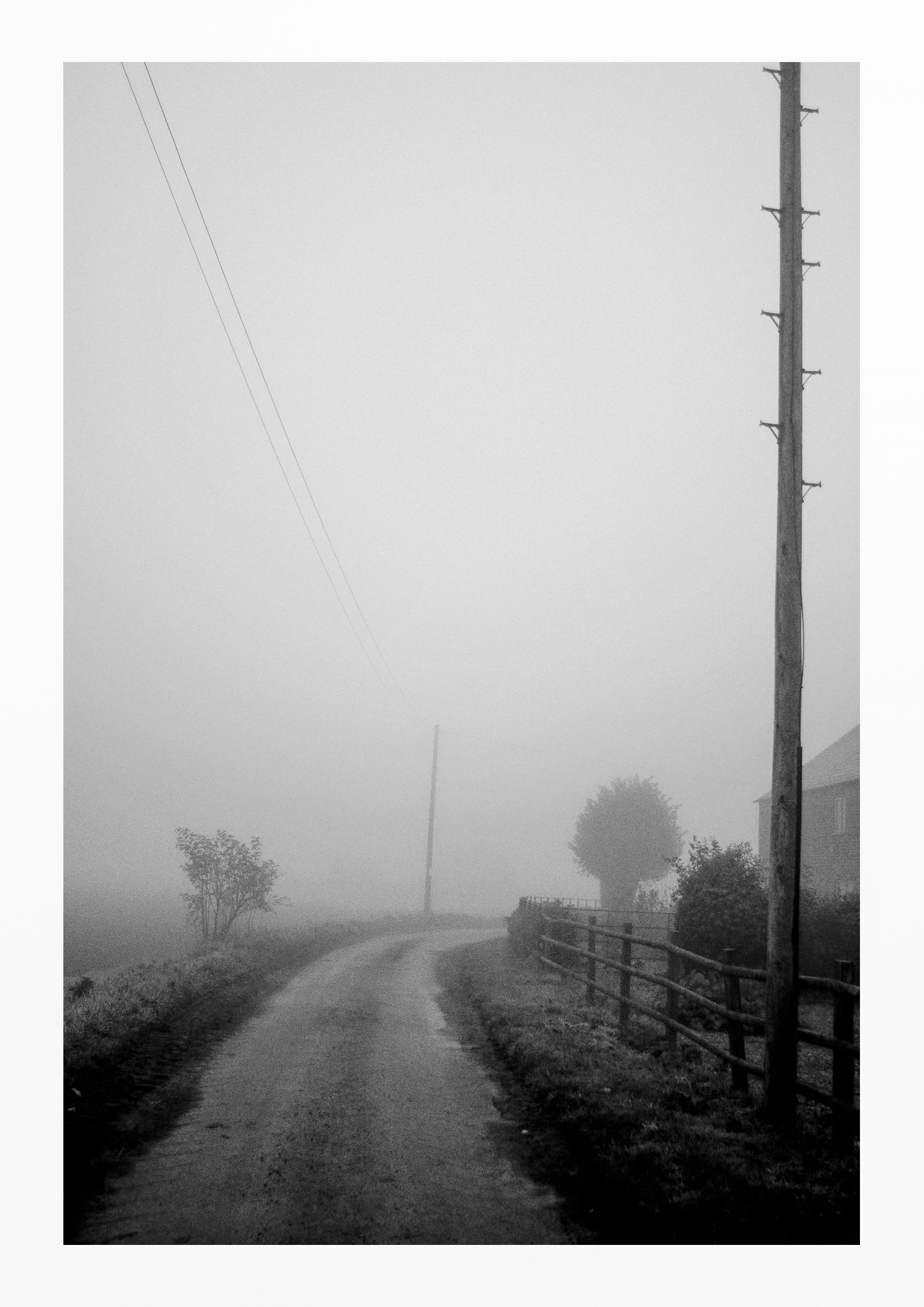
Fog, Mouth Lane 3
The visual restraint of the photographs reflects this condition. The images avoid dramatic light, heightened contrast, or expressive gesture. This is not an aesthetic choice made in opposition to spectacle for its own sake, but one aligned with the subject. The Fenland landscape operates through control rather than excess. Water is regulated, not released. Movement is channelled, not celebrated. The photographs adopt a similar position, allowing the structures and surfaces of the land to assert themselves without emphasis.
Material confidence is important here. These images are intended to be looked at closely and for extended periods. Their surfaces do not rely on visual effects that collapse under scrutiny. The work acknowledges the physical reality of photographic objects: prints that must hold up under sustained viewing. This attention to material reliability mirrors the subject itself, where systems must function continuously rather than momentarily.
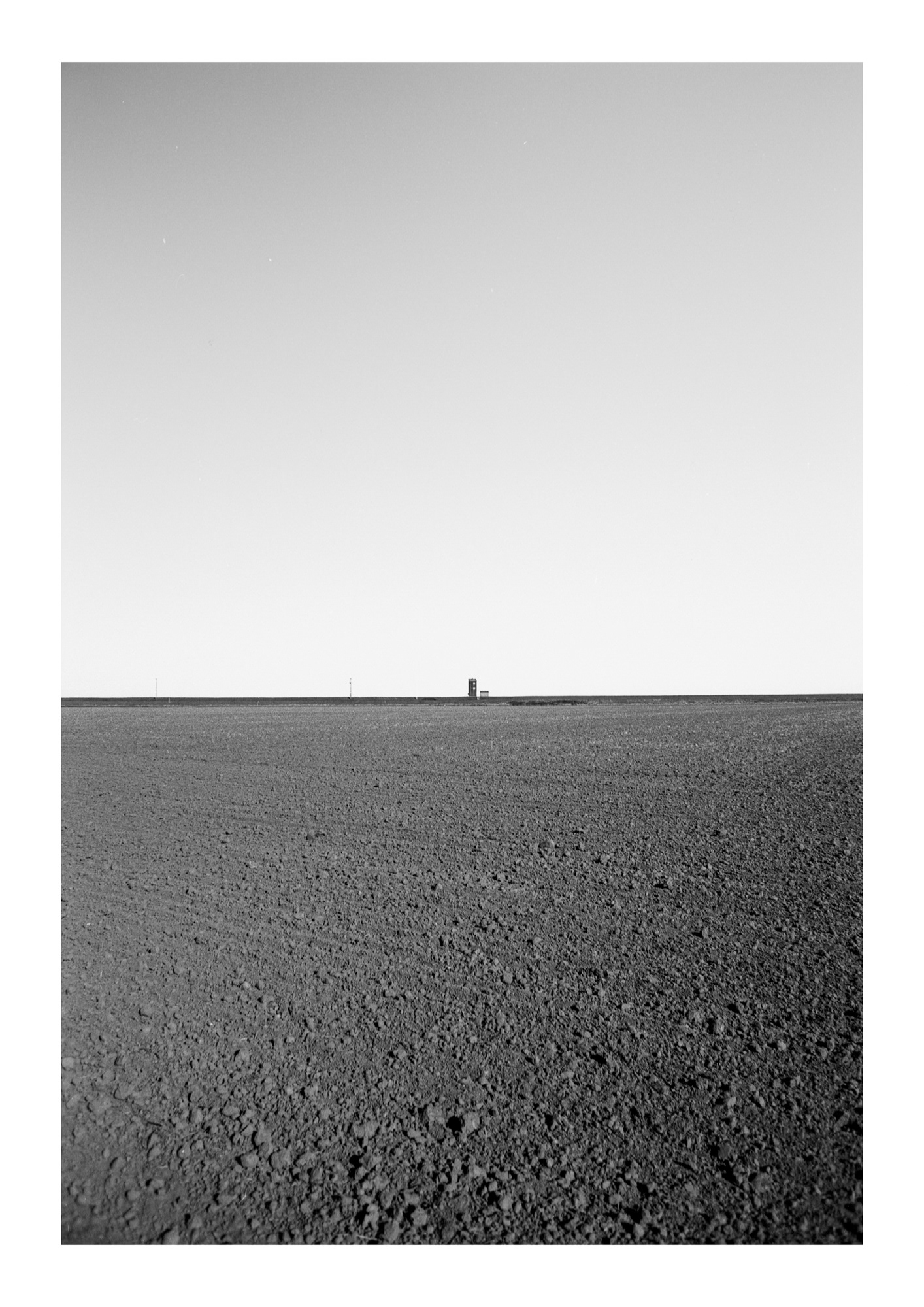
Holbeach St Mathew
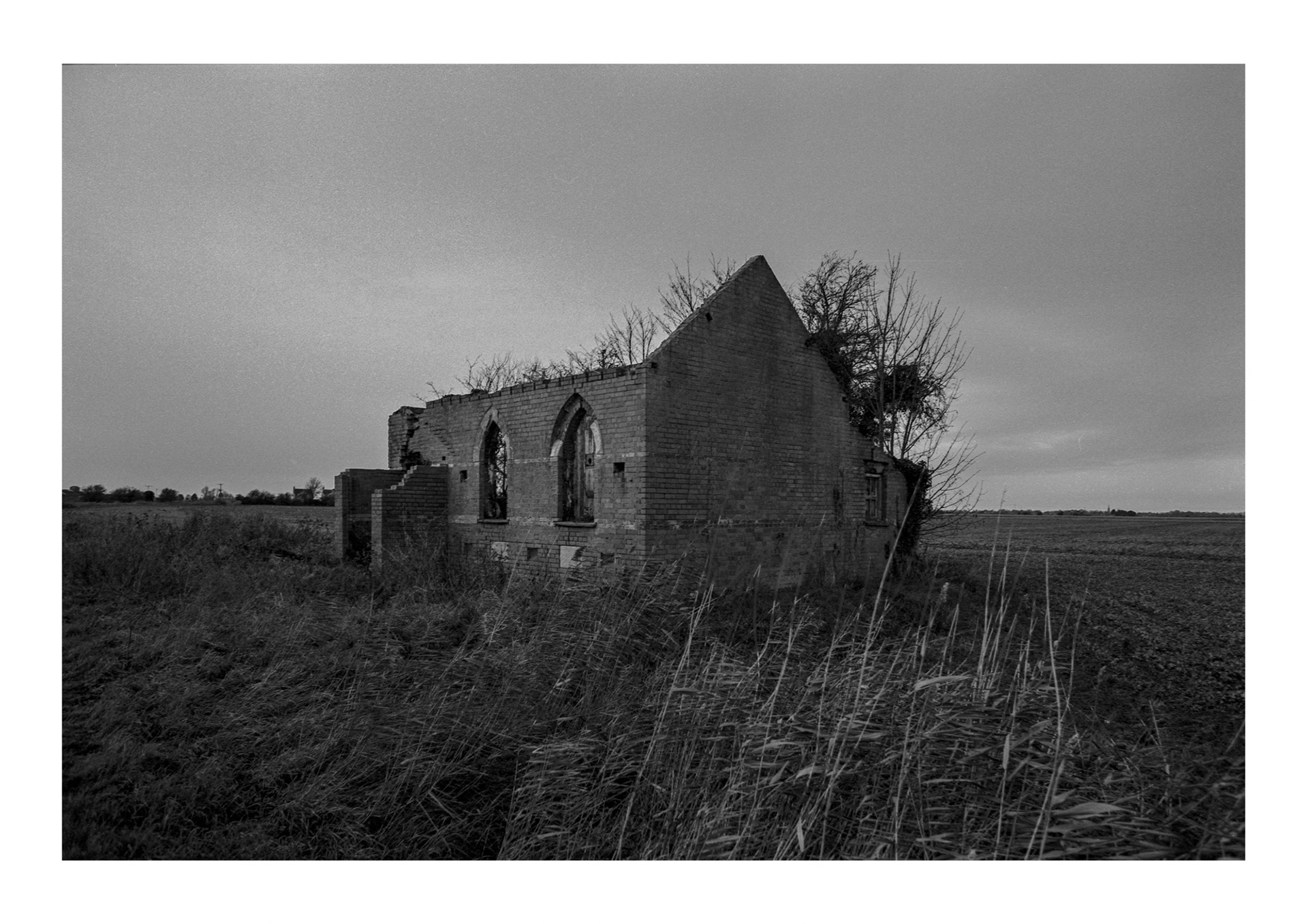
Primitive Methodist Chapel, Whaplode Drove
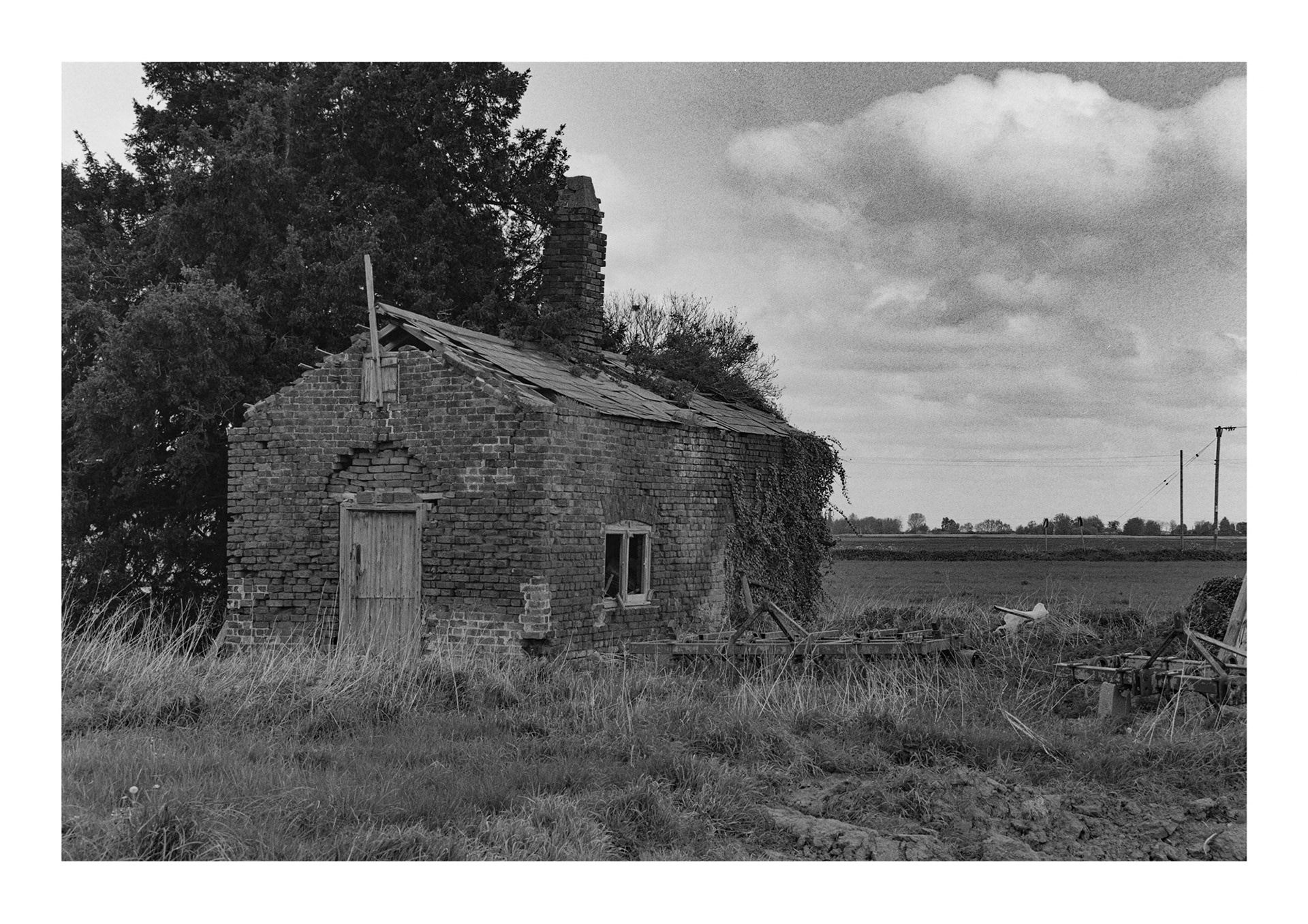
Windmill Bakehouse, Shepeau Stow
The decision to end the sequence with an image of the Ouse Washes is deliberate. The Washes are a managed floodplain, designed to hold excess water during periods of high flow and release it slowly under controlled conditions. They represent the point at which many of the systems depicted elsewhere in the work converge. Ending here does not provide closure in a narrative sense. Instead, it establishes a limit.
This ending resists a familiar visual trope: the road receding into distance, suggesting departure or escape. Such an image would misrepresent the logic of the landscape. The Fens do not offer an outside. They are defined by containment. Water is held. Land is bounded. Excess is managed rather than expelled.
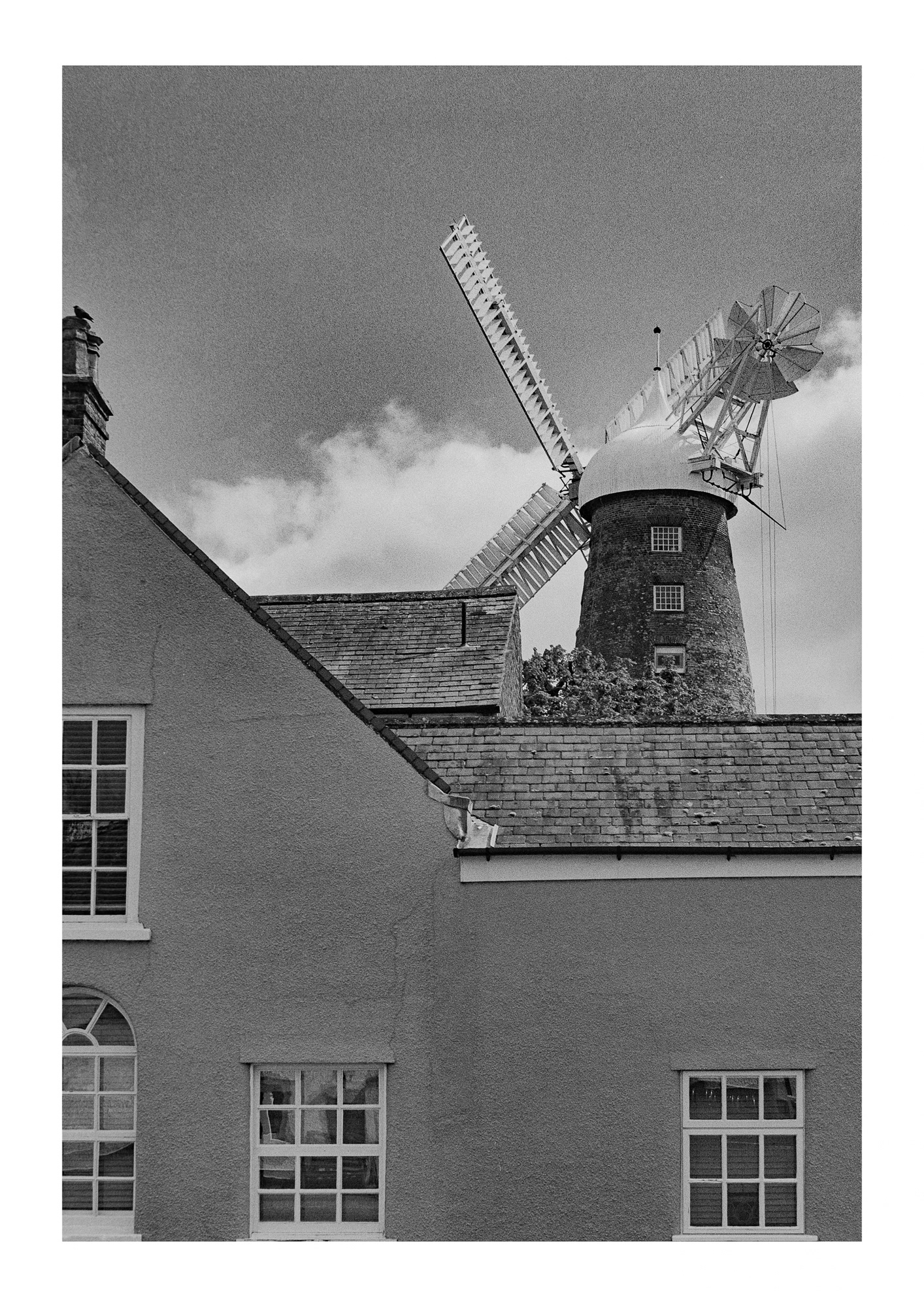
Moulton Tower Mill
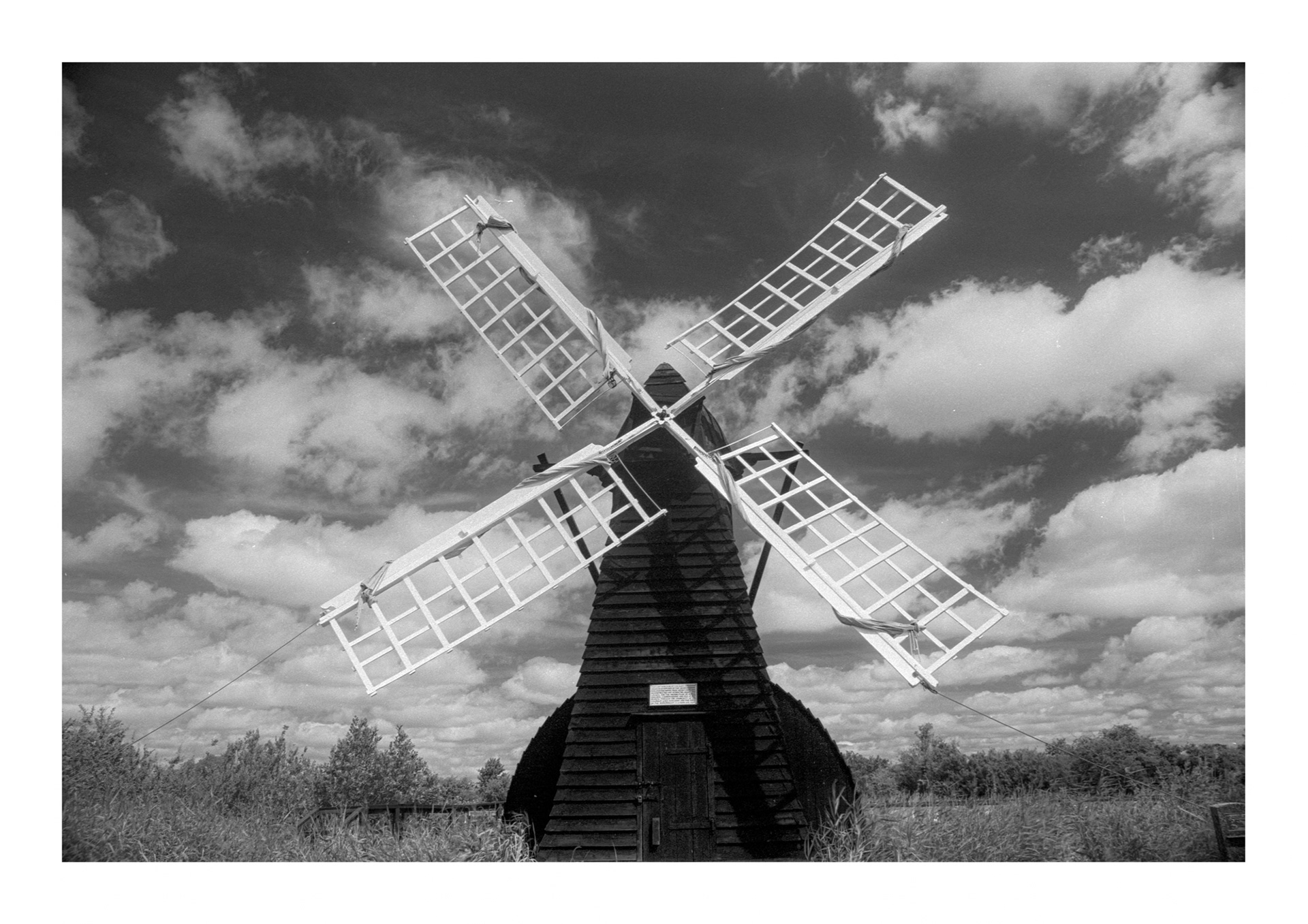
Wicken Fen Wind Pump
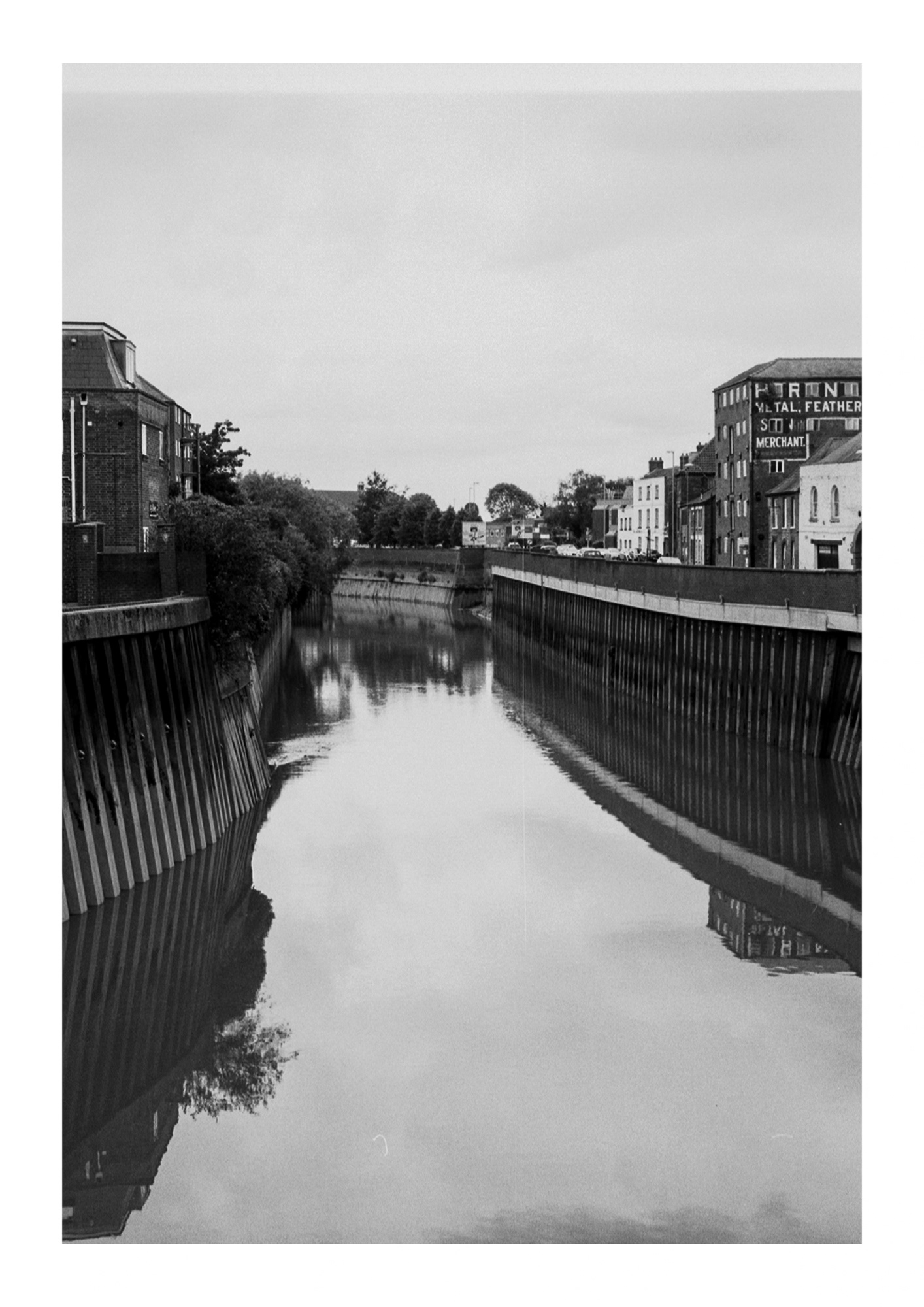
River Nene, Wisbech
Five Years in Fenland does not seek to explain the landscape or resolve its contradictions. It does not propose a singular interpretation or advance a thesis about rural life. Instead, it asks for sustained attention to a place shaped by ongoing labour, historical intervention, and practical necessity. The photographs remain close to the conditions that produced them: repetition, familiarity, and the quiet persistence of structures that keep the land as it is.
The work does not claim authority through revelation or critique. Its position is observational, grounded in time spent and places revisited. In that sense, it reflects the landscape itself: not dramatic, not static, but continually adjusted, held in place by systems that rarely announce themselves yet cannot be ignored.
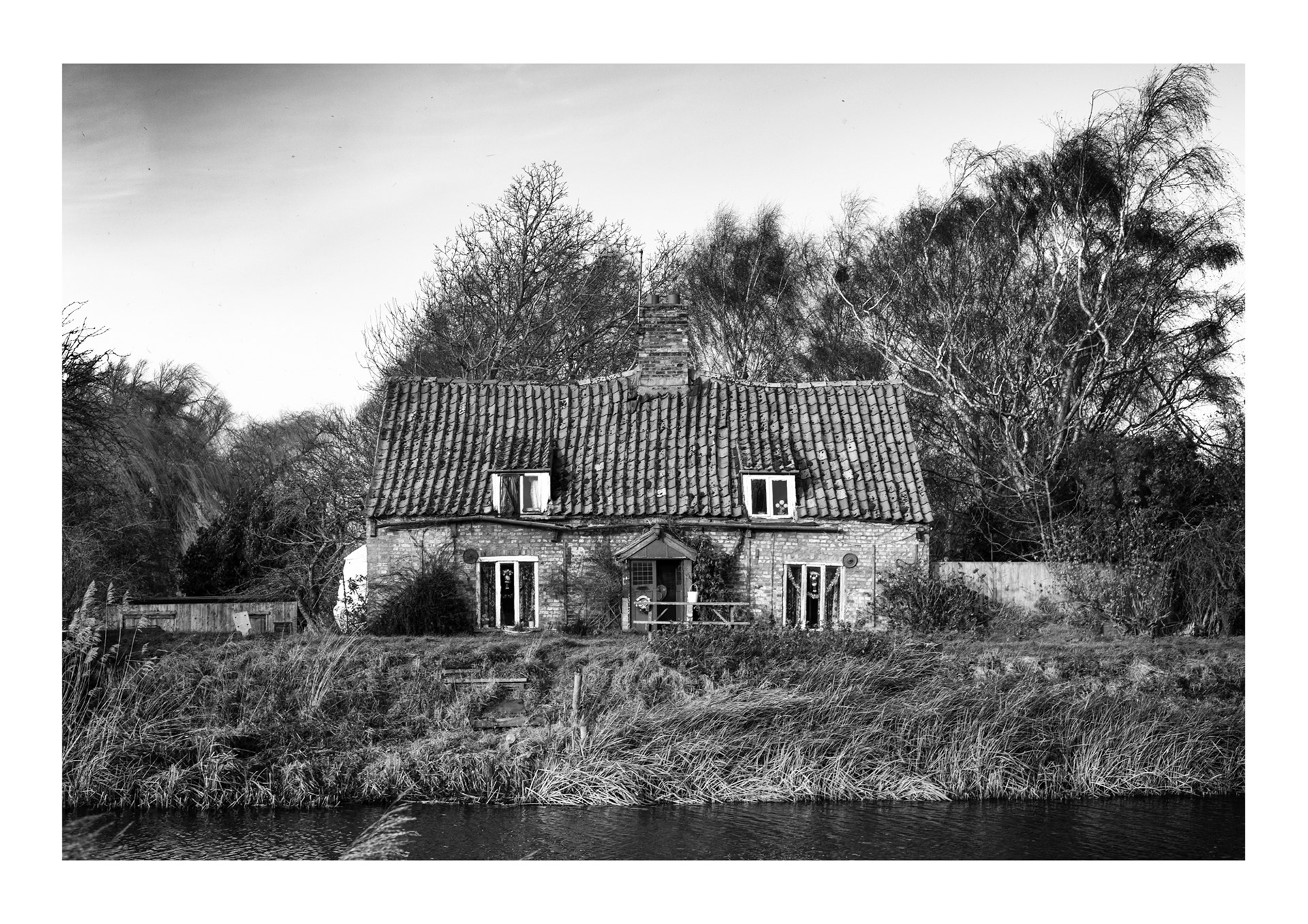
Cottage, Ouse Washes
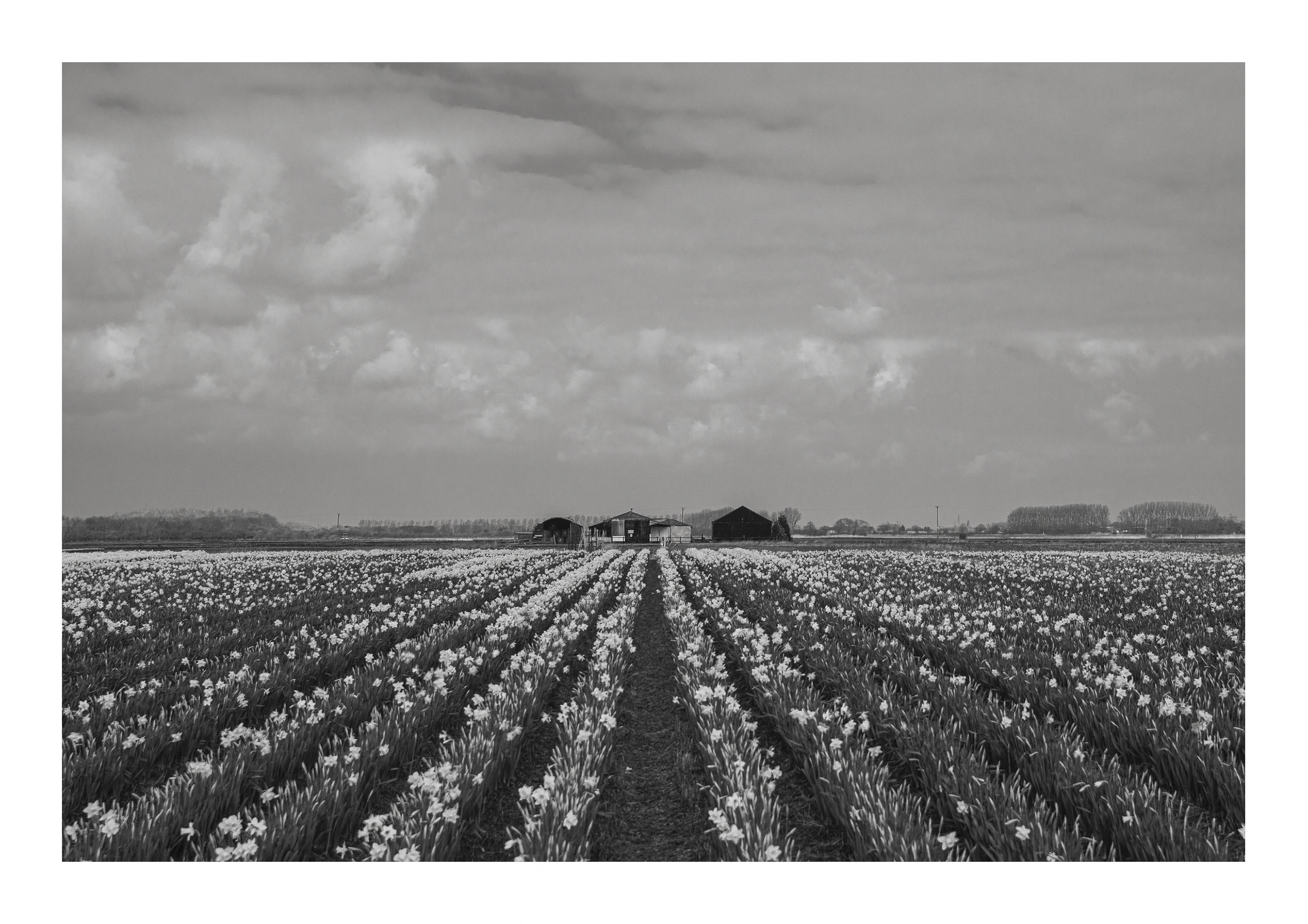
Daffodils, Sutton St James